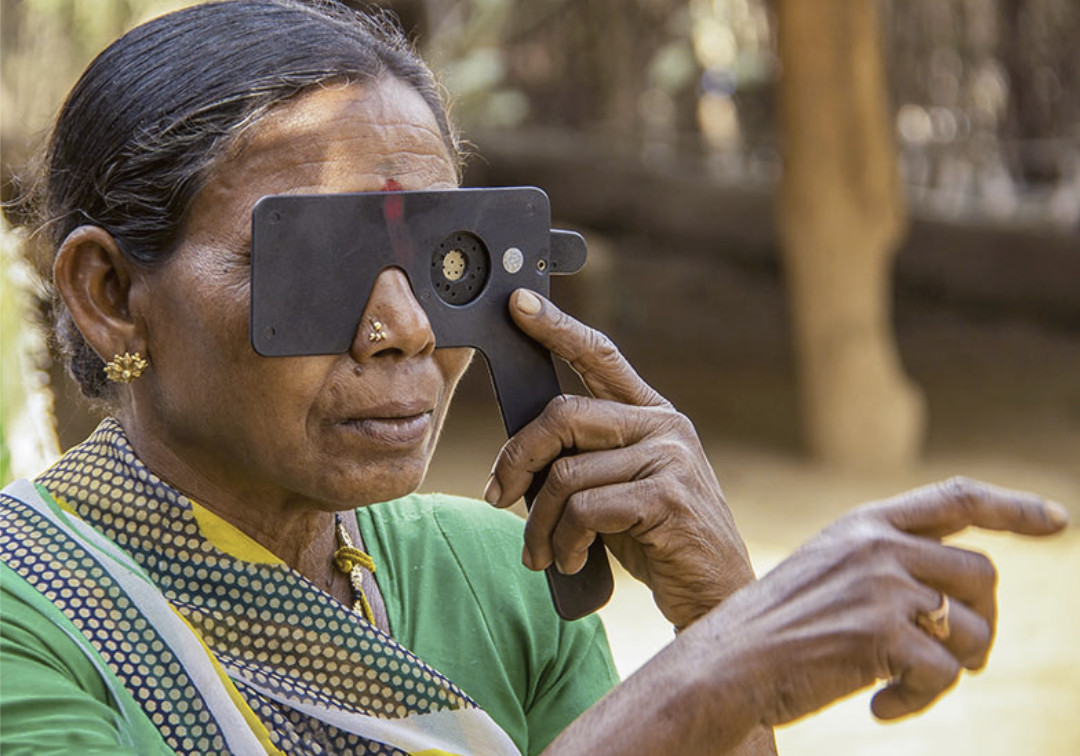


In a new study, Varsha Rathi and Rohit Khanna analyzed visual outcomes of cataract surgeries at rural secondary centers, identifying factors linked to poor vision after surgery and the role of follow-up care.
A stark contrast exists between urban and rural healthcare systems in India with urban centers enjoying better access, facilities and specialty care. Such disparities result in increased disease burden in rural populations, especially among women, the elderly, and people from a lower socioeconomic background. They often don’t seek timely care due to limited financial autonomy, lack of awareness, or proximity to hospitals. To address this gap, the L V Prasad Eye Institute pioneered the Eye Health Pyramid model, which decentralizes care by bringing screening and follow-up to primary vision centers and surgery to secondary centers in a ‘Village Vision Complex’. Within this framework, surgical outcomes not only reflect access to such services but also throw light on the gaps affecting the outcomes for key causes of vision loss.
Cataract remains the leading cause of blindness and visual impairment in the world. A key WHO measures for gauging the impact of eye care service delivery is the overall rate of good outcomes from cataract surgery in a population. A good outcome is when a patient has very good post-operative visual acuity (how clearly a person sees after surgery). Various factors influence this outcome including age, gender, existing disease, the surgical technique used, the experience of the surgeon, and complications. Studies in the past have shown that rural patients, for example, have poorer outcomes. Can the LVPEI model improve outcomes in rural areas?
In a new study published in the Indian Journal of Ophthalmology, Varsha Rathi and Rohit Khanna analyzed cataract surgery outcomes from 20 rural secondary eye care centers across four Indian states. They analyzed data from 1,23,685 cataract surgeries performed between 2016 and 2020. Most patients were over 60 years of age (71%), and 57% were women. About 82% of surgeries were performed using manual small-incision cataract surgery (MSICS), a common procedure in resource-limited settings, while the rest underwent phacoemulsification. Patients were followed up at regular intervals for both uncorrected and best corrected vision.
Over 91% of patients achieved good vision (6/12 or better) with correction, and nearly 94% achieved vision of 6/18 or better at the final follow-up. The study found that factors like old age, the presence of pre-existing eye disease, and intraoperative complications were all linked to poorer outcomes. While the findings indicate that good outcomes are achievable even in rural centers the authors also note that loss to follow up (20%) mirrored the disparities – nearly 75% of these patients were above 60 years, more than half were women, and more than three-quarters had undergone free MCIS. Social determinants of health continue to shape outcomes to an extent despite a decentralized approach.
'Establishment of permanent centres of eye care in rural areas contributes to improved service delivery outcomes and better compliance with follow-up care, in line with WHO and NPCB&VI recommendations on integrated, people-centred eye care,' notes Dr. Rohit Khanna, Network Director for the Public Health unit of LVPEI.
Citation
Rathi VM, Khanna RC. Visual outcomes of cataract surgeries performed at a network of rural eye centres in southern and eastern India - A model for scaling effective cataract surgical coverage. Indian J Ophthalmol. 2025 Dec 1;73(12):1801-1806. doi: 10.4103/IJO.IJO_1185_24. Epub 2025 Nov 24. PMID: 41288633; PMCID: PMC12707413.
Photo credit: Srinivas Marmamula.