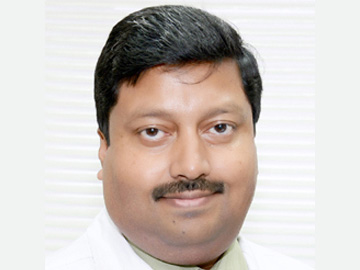


Dr Subhabrata Chakrabarti, Network Associate Director (Research) at the Prof Brien Holden Eye Research Centre in LVPEI has been invited to the Regional Advisory Council of ARVO (Association for Research in Vision and Ophthalmology), USA; and the ASM India Country Advisory Council (CAC) of the American Society for Microbiology!
He has also received the invitation to serve as Council Member of the Asia Pacific Society of Ophthalmic Cells and Gene Therapy (APSOCGT), a new society advancing ocular stem cell and gene therapy research in the region. Reflecting on these achievements, Dr Subhobrata speaks with our editorial team:
ARVO's Regional Advisory Council (RAC) is a newly created structure of governance under the ARVO Board of Trustees across five global regions comprising Asia/Pacific, Europe, Latin America, Africa/Middle East, and North America. Our contributions will be directed towards enhancing equitable opportunities, sharing and exchanging advances in science, creating educational and networking opportunities, and increasing engagement in the Asia Pacific region. Our aim will be to build a stronger and more collaborative eye and vision research community, which will provide a structured channel for ARVO leadership to engage with members in this region and ensure diverse perspectives for shaping future initiatives.
With the new role in ASM's India Country Advisory Council, we asked Dr Subho how he sees microbiology intersecting with opthalmology.
Dr Subho: The role of ASM's India Country Advisory Council is to identify and prioritize needs of the microbiological community and foster partnerships and collaborations across various scientific societies, organizations and stakeholders in the country to advance microbiological research, education, surveillance and advocacy. As various ocular infections contribute to significant proportions of vision impairment, ASM-ICAC will integrate ophthalmology as a priority in the broad framework of India's microbiological landscape and strategize specific action plans towards tackling infections and outbreaks through advanced research, education and awareness.
As a Council Member for APSOCGT, Dr Subho also shed light on the breathrough in ocular gene therapy that he is most hopeful about for patients from the Asia Pacific region.
Dr Subho: As gene-based treatments are being developed for various eye diseases worldwide, the APSOCGT will initially provide a framework and guidelines for the identification of patients who would be conducive to undergo such treatments. Compared to the rest of the world, the Asia Pacific region has its own uniqueness based on diverse biological and cultural attributes. Hence, it will enable focussed gene-based treatments that are exclusive to this region and promulgate such therapies in the background of ethical principles and regulatory compliances.
These three appointments not only highlight the expanding scope of Dr Subhabrata Chakrabarti’s contributions, but also LVPEI’s growing impact across global vision science, microbiology, and emerging gene‑based therapies.