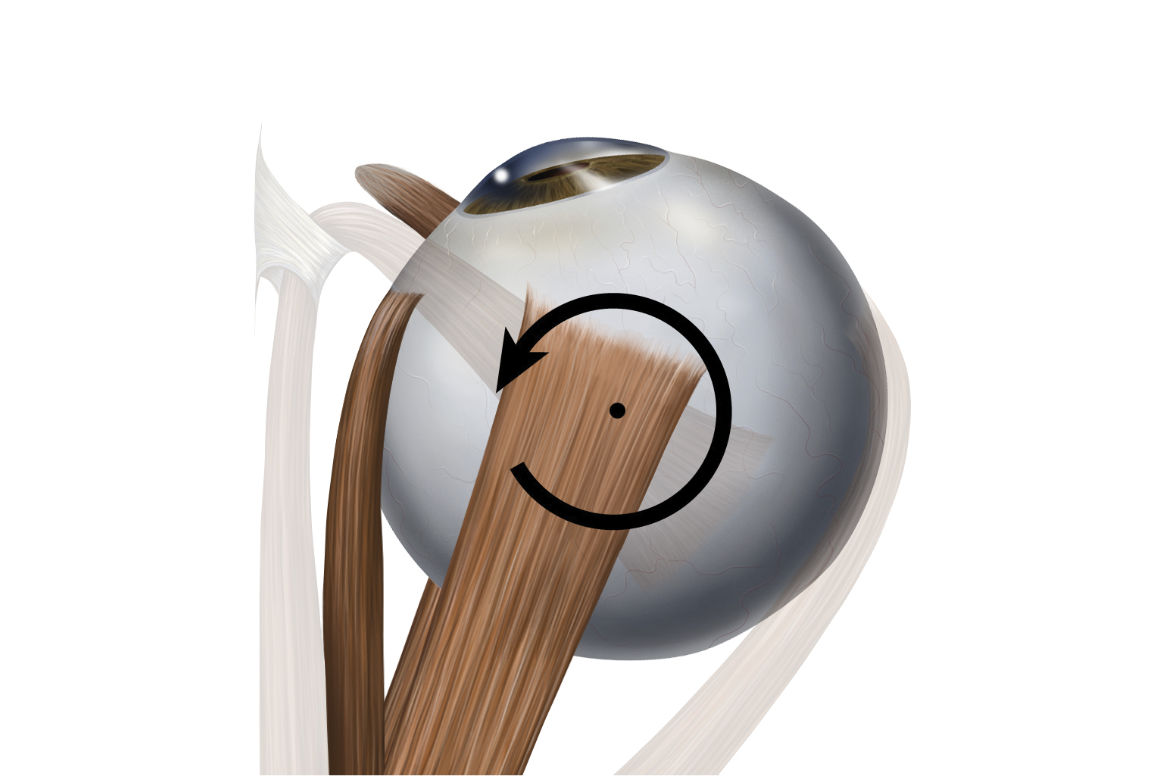


Amol Aashish Bansal, Virender Sachdeva, and Ramesh Kekunnaya from LV Prasad Eye Institute review ten cases of infection following strabismus surgery and provide a practical guide for clinicians on how to manage them.
In 1839, German surgeon Johann Friedrich Dieffenbach performed the first documented surgery to correct a ‘squint eye’ (strabismus); misaligned eyes that do not point in the same direction. Nearly two centuries later, myotomy, or the cutting of a muscle to relieve a constricted movement, remains a routine surgical intervention for strabismus. In people with strabismus, one eye may turn inward, outward, upward, or downward while the other remains focused. This misalignment can cause blurred or double vision and affect depth perception in children. Surgery to correct this involves realigning the eye muscles by detaching one or more of the six muscles that move the eyeball, adjusting their position and reattaching them to the sclera (the white outer layer of the eye). But like all surgical interventions, it carries a risk of infection.
Surgical site infections after strabismus surgery occur in 1 in every 1,100 to 1,900 procedures—about a o.1% risk. These infections differ in severity and can present as an infection of the eyelid, or where the infection spreads into the orbit, the bony socket surrounding the eye. In more severe cases, it can cause thinning and damage to the sclera. The worst possible outcome is complete and irreversible vision loss. Most patients undergoing strabismus surgery are very young children who cannot reliably report early symptoms, making early identification of the infection difficult. The rarity of infection adds to the difficulty in its diagnosis. It is therefore important for surgeons to know how to identify, treat, and manage postoperative infections.
In a review and case series published in the Survey of Ophthalmology, Amol Aashish Bansal, Virender Sachdeva, and Ramesh Kekunnaya describe ten (6 female, 4 male) cases of post-strabismus surgical infection documented at LVPEI. The cases ranged from mild infections that resolved with antibiotics to severe infections that required surgery. Of the 10 cases, 7 needed surgical intervention suggesting the infection progresses rapidly and cannot be treated with antibiotics alone. The authors report that infections appeared early: the mean onset of symptoms was 2.7 days after surgery, indicating that the first postoperative week is critical and needs close monitoring. Sometimes even a healthy-looking eye on the first postoperative day does not rule out an evolving infection.
The infection was caused by Staphylococcus aureus in 8 of the 9 cases in which cultures were obtained. The authors suggest empirical antibiotic treatment while awaiting culture results and modifying it depending on resistance patterns based on the findings. Interestingly, the medial rectus muscle was involved in all but one case, the same muscle targeted in Dieffenbach’s first recorded procedure. The paper reviews how these infections present and the different ways to treat them, drawing insights from earlier studies. The review puts together a stepwise approach for clinicians to consider including for early identification, prevention, microbiological sampling, surgical management, and the role of steroids (in select cases) for managing inflammation.
'Most of the cases in our series were caused by a single organism which were most susceptible to Chloramphenicol and Vancomycin,' noted Dr Amol Bansal, the first author of this paper, and a consultant ophthalmologist at LVPEI. 'So, we could consider starting these drugs early, as we wait for culture and sensitivity test results to arrive.'
Citation
Bansal AA, Sachdeva V, Kekunnaya R. Infection post strabismus surgery: A review and case series. Surv Ophthalmol. 2026 Feb 24:S0039-6257(26)00020-2. doi: 10.1016/j.survophthal.2026.02.008. Epub ahead of print. PMID: 41747837.
Photo credit: Eye movements adductors, Patrick J. Lynch, CC BY 2.5