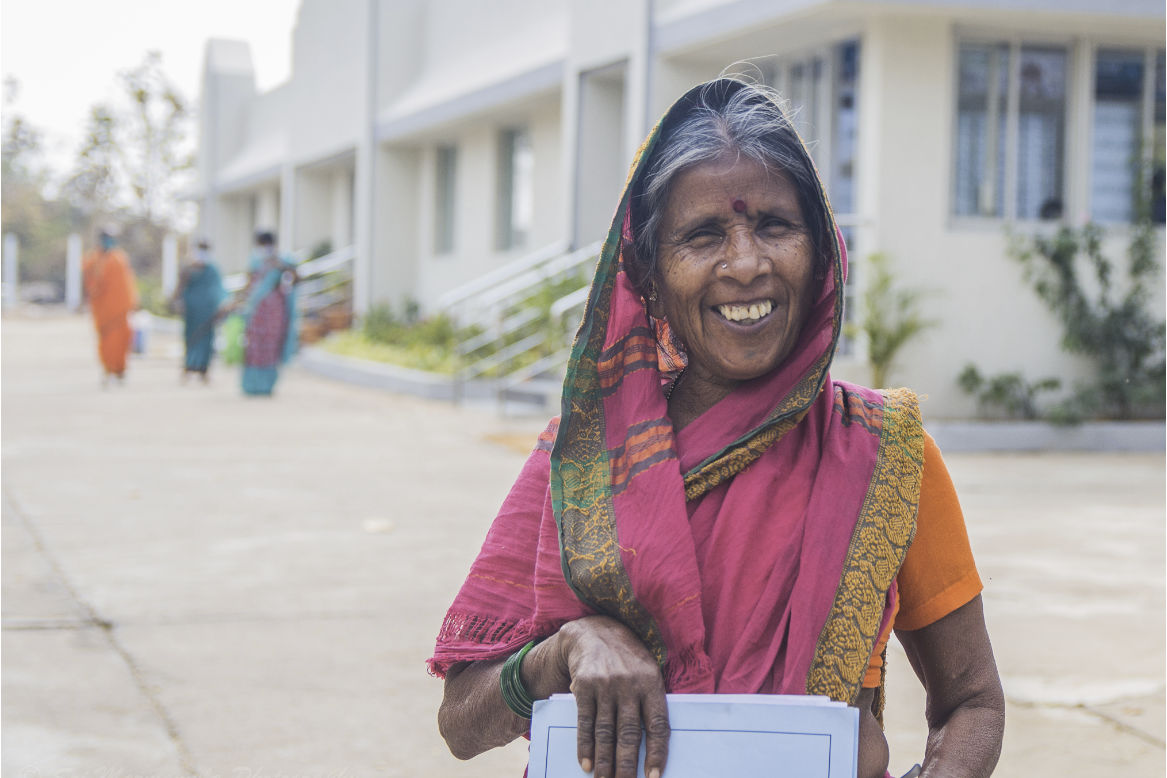


Srinivas Marmamula, Vinitha Mingi and colleagues from LV Prasad Eye Institute assess visual outcomes after cataract surgery across four districts in Telangana, finding improvement over two decades but with a gap from global benchmark.
In 1976, India launched the National Programme for the Control of Blindness, the first country-level initiative in the world to address preventable vision loss. The program focused on cataract, a condition where the eyes’ clear lens becomes cloudy, impairing vision and leading to blindness. In fact, cataract remains the leading cause of blindness worldwide, though it is also one of the most treatable conditions. Cataract surgery involves removing the cloudy lens and replacing it with an artificial one, a 20-minute surgical procedure that restores vision. In the years since it was launched, India has made great progress in ensuring access to cataract surgery. But the success of these efforts depends not just on how many patients underwent surgery but on how well a patient can see afterwards—its outcomes.
The World Health Organization recommends that at least 80% of operated eyes achieve good visual outcomes (6/18 or better), and fewer than 5% result in poor outcomes (worse than 6/60). Though the surgery is highly effective, the final visual outcome depends on several factors like the patient’s age, existing eye conditions, the quality of surgery, and follow-up care. Twenty years ago, data from across the country showed poor outcomes after surgery ranging from 20-50%. In time, both surgical techniques and assessment methods have been refined. Population-based surveys such as the Rapid Assessment of Visual Impairment (RAVI) are new, powerful tools to evaluate vision and eye health directly within communities. Nearly 50 years after NPCB’s launch, what can RAVI tell us about the impact of large-volume cataract surgery?
In a study published in Ophthalmic Epidemiology, Srinivas Marmamula, Vinitha Mingi and colleagues used the RAVI methodology to assess visual outcomes after cataract surgery across four districts in Telangana representing approximately one-third of the state’s population. The study assessed 11,238 individuals aged 40 years and above, of whom 1,332 (1,850 eyes) had undergone cataract surgery. The study found that nearly 72% of operated eyes achieved good vision, which was a little short of WHO’s recommendation of 80% while 11.2% had poor outcomes, more than double the WHO recommendation, but a big improvement from previous outcomes.
Poor outcomes were more likely among individuals with no formal education and in those who underwent free surgeries, showing that social factors influence outcomes despite improved accessibility. More women (54.6%) underwent surgery, reflecting on the reach of community-based programmes. The leading cause for visual impairment after surgery were posterior segment diseases (conditions affecting the back of the eye; 37%) and uncorrected refractive error (36%)—most of which can be treated or corrected. The findings imply that access alone is insufficient. It is equally important to ensure patients return for follow-up to reap the benefits of cataract surgery.
'Cataract surgery is not a one-time intervention. Regular follow up is required for correction of residual refraction errors and management of other eye conditions that are often age-related. Only then the benefits of cataract surgery are sustained on a long run,' says Dr Srinivas Marmamula, Network Associate Director – Public Health Research, and the corresponding author of this paper.
Citation
Marmamula S, Mingi V, Karthikeyan MRR, Khanna RC. Population-Based Assessment of Visual Outcomes After Cataract Surgery in Four Districts in Telangana, India. Ophthalmic Epidemiol. 2026 Feb 18:1-8. doi: 10.1080/09286586.2026.2624449. Epub ahead of print. PMID: 41705358.
Photo credit: Srinivas Marmamula