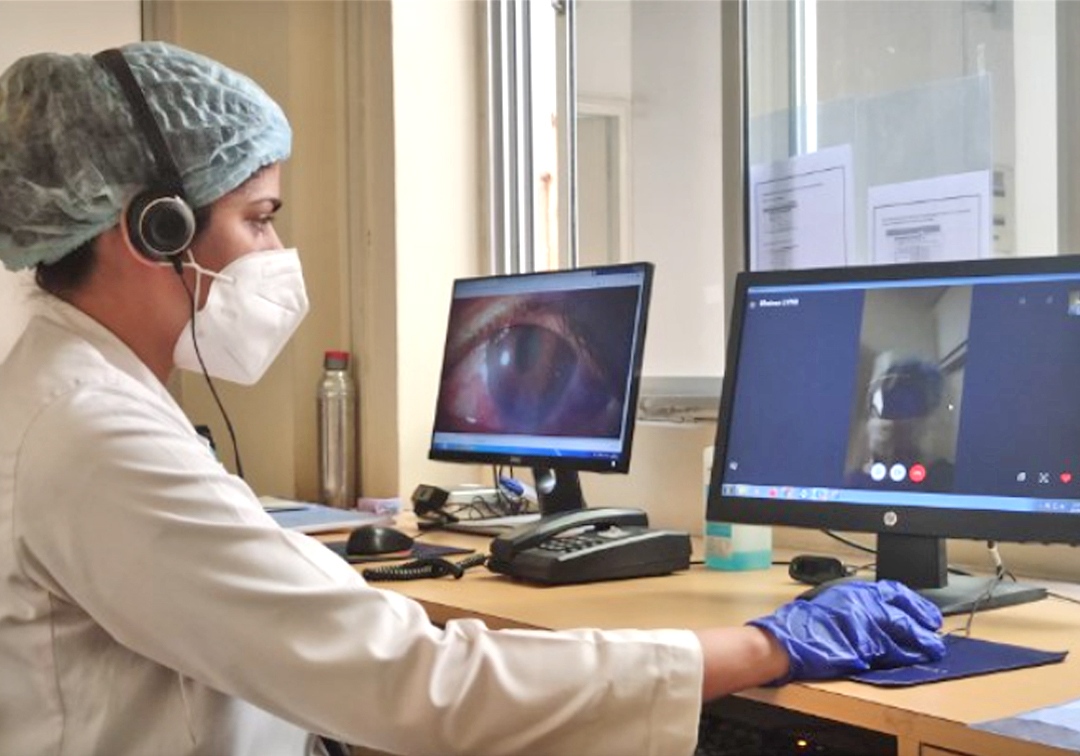


Dr Pravin Krishna Vaddavalli and others from The Cornea Institute at L V Prasad Eye Institute evaluate remote, teleconsultation follow-up for refractive surgery. Their study finds that teleconsultations post-procedure led to lesser physical visits without impacting visual outcomes.
Telemedicine offers the promise of collapsing the distance separating a care provider and a patient. Ophthalmic practice, especially for the remote screening of diabetic retinopathy, retinopathy of prematurity, and even glaucoma, has been using teleconsultation for decades now. In fact, many organizations including LVPEI run real-time, tele-consult sessions to screen for, and to diagnose patients who visit their rural or peri-urban centers that do not have a trained ophthalmologist. The sector today has a lot of experience and ready infrastructure to run full-fledged teleconsultation services. Tele-consultations also help decongest tertiary and apex facilities and improve patient waiting times.
The COVID-19 pandemic gave the eye health sector an added impetus to deploy tele-medicine and tele-consultation services across the board. The World Health Organization, the Government of India, and the All India Ophthalmological Society have all supported the uptake of digital health and tele-medicine services during the pandemic. They also note that tele-medicine is here to stay and will long outlast the depredations of this period. It is important therefore that a variety of ophthalmic services, including the anterior segment clinics that see the most cases, deploy telemedicine practices and monitor outcomes.
In a new paper in the Indian Journal of Ophthalmology, Dr Pravin Krishna Vaddavalli and his colleagues from The Cornea Institute at LVPEI, evaluate tele-consultation follow-ups after refractive surgery. Their retrospective, comparative study analyses 1795 eyes (936 people) divided into two groups: group 1 with only physical consultations, and group 2 with at least one remote consultation three days after surgery, as part of their post-procedure follow-up.
Photorefractive Keratectomy (58.6%) was the most common procedure in this study, followed by LASIK (33.7%) and SMILE (7.62%). Nearly 90% achieved 20/20 uncorrected distance visual acuity, while an even higher percentage in both groups achieved 20/25 or higher. By converting just one post-op consultation into a teleconsultation, the study safeguards the patient from any potential drawbacks of this approach. Group 2 (with one teleconsultation) saved a full day from the total visits required by the patients. This translates to all sorts of savings for the patient and did not lead to any change in the post-operative outcomes compared to Group 1. This result is encouraging and opens a new viable alternative for anterior segment clinical practice.
Dr Pravin Krishna Vaddavalli, the lead author and Director, The Cornea Institute, says, ‘teleconsultations offer many opportunities to aid patients and clinics, especially in a cornea practice. However, a careful process of offering it to patients with less probability of post-surgical complications along with clear paths for escalation should be the way forward.’
Citation
Singh, Vivek; Akkulugari, Vidhyadhar; Reddy, Jagadesh; Gogri, Pratik Y; Vaddavalli, Pravin Krishna. Impact of teleconsultation on visual and refractive outcomes in patients undergoing laser refractive surgery during COVID-19. Indian Journal of Ophthalmology: September 2022 - Volume 70 - Issue 9 - p 3272-3277
doi: 10.4103/ijo.IJO_313_22
Photo credit: Teleophthalmology command centre, courtesy of The Cornea Institute.