
Color Blindness
Last updated: 13th May 2026
Overview
Color blindness, a common eye disorder, is the inability to view and distinguish between certain colors, like red and green. Most patients are not completely blind to color. Color vision deficiency (CVD) is primarily an altered perception of color input and affects both eyes equally. It is a lifelong condition.
The condition has a genetic basis and is present from birth. It can sometimes also happen later in life, due to any damage to the optic nerve or retina. It is more common in men.
What is color blindness?
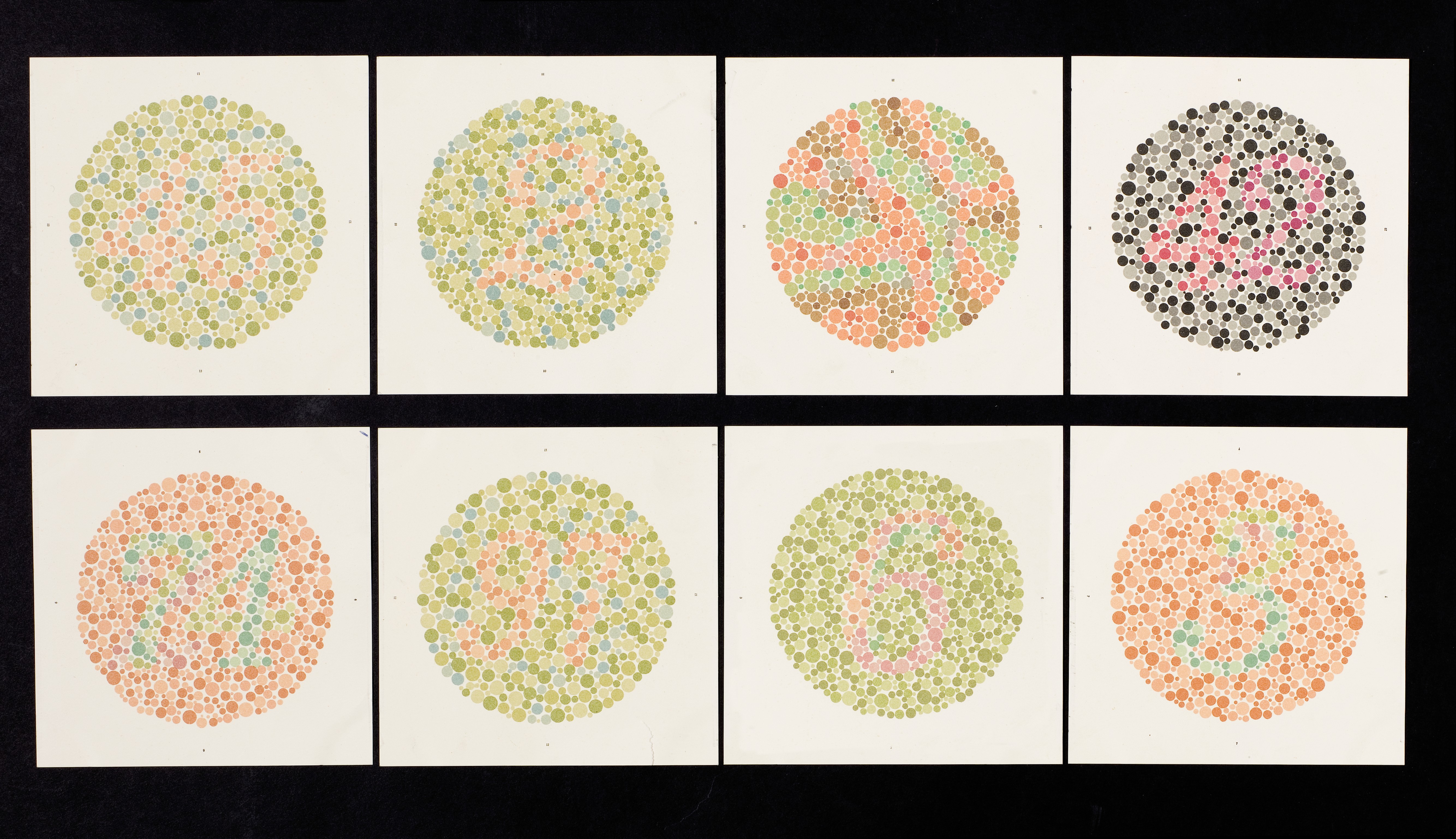
Color blindness is more accurately described as color vision deficiency, as it describes impaired color vision. Impaired color vision presents as an inability to distinguish between different shades of reds and greens, and occasionally blues.
There are different degrees to this. Some people will only have difficulty differentiating colors in dim lights, while others may not be able to do so in any light. True color blindness, though very rare, also exists. In its most severe form, everything around us will be visible in shades of grey, like old black and white TVs.
What causes color loss in eyes?
One of the primary causes of impaired color vision is a genetic malfunction. The condition runs in families, and it is caused by a mutation to the color-related genes on the X chromosome. As men have only one copy of this chromosome (men have XY chromosomes, while women have XX), they are far more likely to develop impaired color vision.
Color is the interpretation of specific wavelengths of eyes by special photoreceptor cells on the retina at the back of the eye. These cells are called cone cells, and there are three types:
- L cone cells (sensitive to Red)
- M cones (sensitive to Green)
- S cones (sensitive to Blue)
Any anomalies in these cells can cause impaired color vision.
Color vision deficiency can also emerge later in life due to:
- Trauma
- Certain eye diseases
- Specific diseases affecting metabolism or blood vessels
- Toxic effects from drugs
Types of color vision loss
There are three types of color blindness:
- Red-green color impairment: This is the most common type of impaired color vision. It is the result of an impairment or loss of red and green cone cells in the retina. This makes it hard for people to make out reds (like a traffic stop light) or distinguish between shades that are built with red or green as a base color.
- Blue-yellow color impairment It is a rarer sub-type of color vision loss. This condition emerges when the S cone cells that sense the color blue are impaired or completely damaged. People with this impairment can’t see blues and struggle with Yellows as well.
- Monochromacy: The rarest of color deficiencies, this is when a patient has no red or green cone cells, or no cone cells at all. The world is awash in grays, and it is very likely that the individual has other eye problems as well.A discharge that forms a crust during the night, which can prevent the eyes from opening in the morning
Treatment
There is no known treatment currently for color deficiencies. However, some options exist to overcome some of its effects.
- Color-correcting glasses: You can ask your optometrist about color-correcting glasses and your suitability for them. start hurting
- X-chrome contact lenses: X-chrome contact lenses can help with red-green color deficiencies. Please speak to a contact lens specialist at LVPEI to check if you are suitable for them.
Frequently Asked Questions
Unfortunately, there are no extant treatments that can fix color deficiencies. If it is an acquired deficiency (that is, due to trauma or another eye condition), you may see some restoration of ability, provided the cone cells are not permanently damaged.
Most people with color vision deficiency will not even realize they have this condition until they take up specific tasks. So, color deficiency does not impair your ability to see. It can still be confusing though, as your perception of the world around you will be different from your friends and family. In rare cases, color deficiency may come along with other forms of vision loss. It is best to get a full assessment.
Certain careers, like in the defense forces or the police, insist on a color test before recruitment. People with color vision deficiencies may not be able to qualify for such posts. However, most other career prospects remain similar to normally sighted individuals.
These glasses may have mixed results. It may work for some people, in specific contexts. It may help distinguish between reds and greens by separating these colors out before they enter the eye, so the brain can process a clear signal. While this may help those with impaired cone cells, it cannot alter color perception in those with other deficiencies.