
Rare Eye Diseases
Last updated: 5th May 2026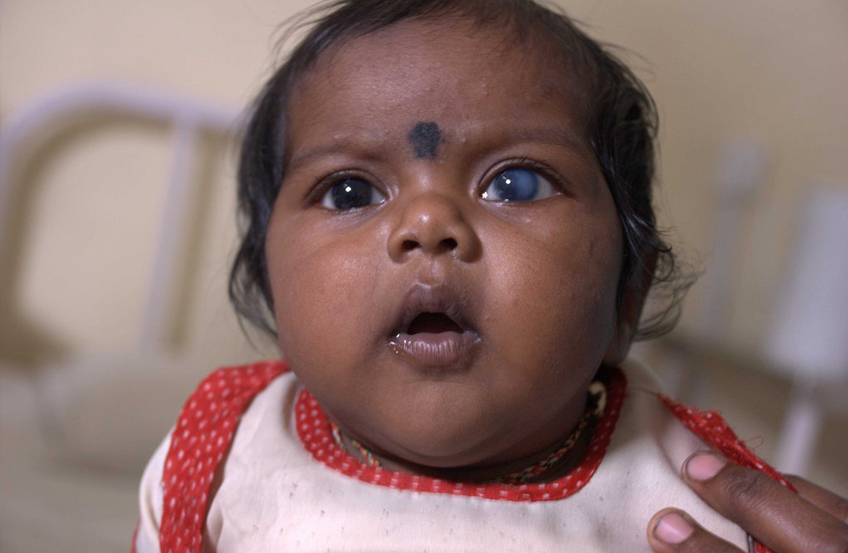
Overview
These are a group of eye diseases that are uncommon, hard to identify, hard to treat and have an adverse impact on quality of life and vision of those who have them. These conditions are so rare that only 1 in every 2,500 Indians have them. There are over 1,000 rare eye diseases that have been documented so far.
Patients with REDs find it very difficult to access diagnostics and lifelong care. This is because our understanding of many of these conditions is still very limited. There is little or incomplete data on how they occur, develop and progress. Treatment options are also limited. LVPEI is one of the few global eye care centres that has dedicated facilities for RED research and treatment.
What are rare eye diseases?
Rare eye diseases are a diverse set of conditions that are not often found in the population. Most REDs are inherited and have a genetic origin. Many emerge in childhood. These conditions do not have established treatment protocols, nor is diagnosing them easy—one reason they are also called “orphan diseases”. In India, consanguineous marriages [1] are a key driver of heritable diseases, including REDs.
The World Health Organization defines rare eye diseases as those conditions that have an incidence of 1 in 2,000 people [2]. India does not have a formal threshold, but some suggestions include a prevalence of 1 in 5000 people.
Types of rare eye diseases
Most REDs have a genetic origin. These genetic disorders can be:
- Autosomal dominant (where even one copy of a mutated gene in one parent is enough to trigger RED)
- Autosomal recessive (where one copy each of a mutated gene is needed from both parents is enough to trigger RED)
- X-linked dominant (where one copy of a mutation on the X chromosome affects both males and females)
- X-linked recessive (where a mutation on the X chromosome affects the males, who have 1 X chromosome, and females if both their X chromosomes have it)
REDs can present either at the front of the eye (the cornea and other ocular parts in the front of the eye) or the back of the eye (retina). All conditions may affect other parts of the eye, and sometimes, like in Anophthalmia/Microphthalmia, the whole eyeball or Primary Congenital Glaucoma which presents as abnormalities in the eye’s drainage system due to genetic mutations.
- Anterior conditions: Some examples include Congenital aniridia (a PAX6 gene mutation) which leads to an absent iris; Corneal dystrophies that are inherited rare disorders of the cornea like the macular corneal dystrophy; and Isolated Ectopia Lentis (an irregular lens) among others.
- Posterior conditions: Examples include a range of inherited retinal diseases or dystrophies like Juvenile X‑linked Retinoschisis which leads to progressive macular degeneration in children; Stargardt Disease that causes a progressive loss of central vision; Familial Exudative Vitreoretinopathy which is characterised by malformed retinal blood supply, among others.
Early and timely identification of patients with REDs is critical for the management of these conditions.
Management options
The Institute for Rare Eye Diseases & Ocular Genetics (IRED) at LVPEI focuses on the research and treatment of these conditions. The ambition is to build a global resource centre for REDs. This first‑of‑its‑kind centre focuses exclusively on advancing eye care and treatment of patients who are diagnosed with rare eye diseases or eye conditions related to rare systemic disease. IRED’s aim is:
- to reduce the morbidity causes by REDs
- to spread awareness on REDs among vulnerable populations, including genetic counselling
- to train and seed research that leads to curative therapies for these rare conditions
Frequently Asked Questions
If you suspect that you or members of your family may be at risk, it is best to seek genetic counselling. This involves understanding your family history, specific testing and sequencing based on health information, and discussing management options if you or someone in your family has an active disease. Reach out to our patient care counsellors for more information.
REDs are the result of a genetic lottery. However, cultural practices like consanguineous marriages do increase the risk greatly. It is best to seek genetic counselling before you proceed for such a marital union to better understand and quantify your risk.