Squint and Binocular Vision
Last updated: 28th September 2026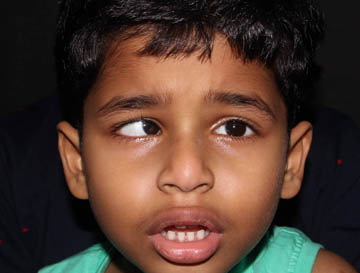
Overview
A squint, clinically known as strabismus, is a condition where a person’s eyes do not align but point in different directions when looking at an object. Strabismus emerges in early childhood for most people, but it can happen at any age. Some 5% of all children seem to have some form of eye misalignment in the world. Children with conditions like Down’s syndrome may have a higher risk of developing a squint.
People with a squint can experience double vision or need to turn their heads in awkward directions to address the misalignment. In some cases, the brain may suppress vision from one eye. Squint is treatable in most cases.
What is strabismus?
A squint or strabismus is an ocular misalignment. In people with this condition, one or more of the six muscles that control an eye’s movement and ensure a fused vision with the other eye have a problem. In people with strabismus, one eye looks inward, or outward, or up, or down while the other eye is looking at the visual target.
Strabismus is identified in childhood. However, a squint can appear at any age. In adults, a stroke or an accident to the head can trigger a squint. In some cases, a childhood squint can recur in adulthood.
What is amblyopia?
Amblyopia is also known as the ‘Lazy eye’. The brain may decide to suppress or ignore visual information from one eye because there is a mismatch. The mismatch is triggered by another condition; strabismus is one of the main causes of amblyopia. As the brain begins to rely more on the ‘stronger’ eye, vision in the ‘weaker’ eye begins to diminish.
The “lazy” eye is in reference to the eye and not the child! The autonomous sympathetic nervous system runs the muscles that move the eye. So, none of us can control them with our will, and definitely not a young child.
What is Binocular vision dysfunction?
Conditions like strabismus or amblyopia—and others too–can impair our ability to form a fused, unified image of an object in the brain: a dysfunction of binocular vision. In addition to fusion and detail (when the two maculas in your eyes send in fine, granular information to your brain), we need our two eyes for ‘stereopsis’: our brain’s ability to build a three-dimensional visual field with depth and colour.
People with BVD may develop diplopia, or double vision. They may even struggle to manage at night or in low light settings, or resolve digital screens. It may also lead to balance issues and dizziness.
What is Nystagmus?
Nystagmus, though not strictly a misalignment of the eye, has its roots in the same underlying dysfunctions that lead to this class of eye disorders: a loss of control over eyeball movements. In people with nystagmus, the eyes ‘roll’ in rapid, rhythmic, uncontrollable and involuntary swings in a particular direction. Several neurological issues could lead to this condition.
People with nystagmus can struggle with vision issues and will need help from an eye health professional.
Types of Squint
Strabismus can be classified based on the turn of the eye, when it emerges, how often or by the nerves and muscles affected.
When the eyes align towards a single object on a plane and the brain can fuse their inputs into a single image, it is called ‘vergence’. However, in an effort to achieve vergence, some eyes will stress out and focus inward.
- Esotropia: Where one or both eyes turn ‘inward’ towards your nose on a horizontal plane.
- Exotropia: Where one or both eyes turn ‘outward’ towards your temples, on a horizontal plane.
- Hypertropia: Where one or both eyes turn ‘upward’ towards your eyebrows, on a vertical plane.
- Hypotropia: Where one or both eyes turn ‘downward’ towards your cheeks, on a vertical plane.
What are the symptoms?
People with squint have clear and palpable signs that are easily recognizable by others. Apart from misaligned eyes, they may present with:
- Shutting one eye to focus on a specific object with the active eye
- Complaints of double vision
- A marked and persistent head tilt
- Poor vision in one eye
- Difficulty seeing in poor light conditions
Treatment options
Patients with strabismus have several options.
- Eye patches: In some kids, a patch on the stronger eye can make the weaker eye strong over time. Eye patches are prescribed for use for a few weeks and months.
- Eyeglasses: Spectacles with adequate power can reduce the stress of focusing on an object for eyes with strabismus. This relaxation may help eyes remain ‘straight’ and achieve vergence.
- Prism lenses: Prism lenses can correct double vision by bending light to the correct focal point on the retina, allowing the brain to fuse this input with the other eye.
- Orthoptics: Young children and adults may benefit from exercises to strengthen the eye muscles.
- Surgery: When no other option works, your eye doctor may recommend a surgery to correct the length or position of eye muscles.
In a first-of-its-kind prescription at LVPEI, we marked a significant step in improving quality of life for patients with severe mobility and gaze restrictions.
Watch how a 73-year-old patient, unable to bend his head or rotate his eyes due to nerve-related issues and completely dependent on his wife for daily activities, was prescribed Recumbent Spectacles, also known as Bed Spectacles, at LVPEI.
Frequently Asked Questions
A variety of treatment strategies exist to tackle strabismus. Most people can achieve excellent vision after treatment. Please speak to your eye doctor for options that suit you best.
People with squint live with a lot of social stigma because of their divergent looks. It is a dysfunction that can be corrected and should not be a cause for distrust or abuse.
Squint is not a preventable condition, and many conditions can result in strabismus, including a stroke or an accident.
You may look like a very cool pirate if you wear an eye patch.
Anyone with frequent headaches, eye strain, reading difficulty, or double vision, as well as those diagnosed with lazy eye (amblyopia) should seek a binocular vision exam.
Absolutely. Poor binocular coordination may lead to symptoms that interfere with learning, focus, and productivity.