Under Eye Hollows
Last updated: 10th May 2026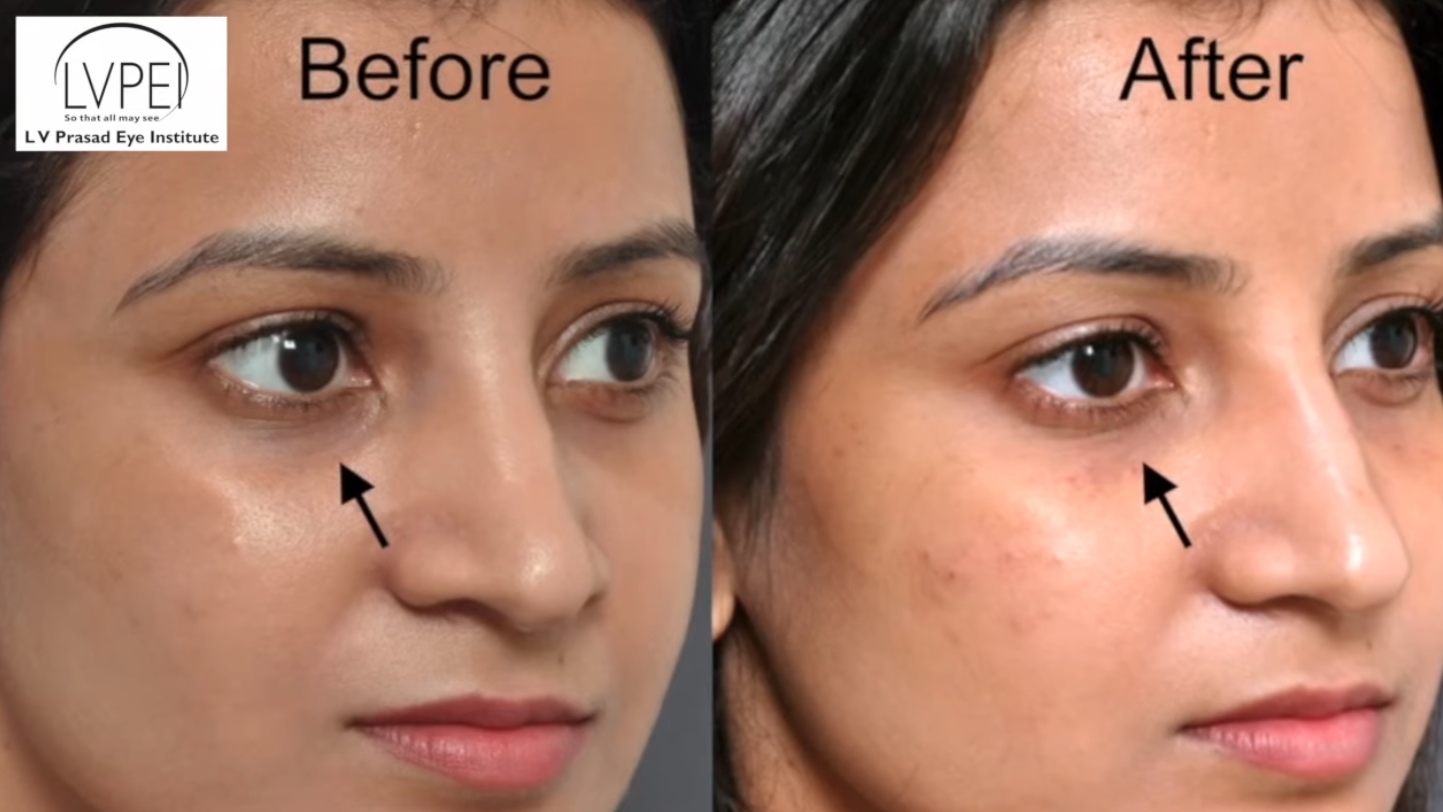
Overview
With age, the under eyelid undergoes many changes giving your face that classic ‘tired look.’ Eyelid bags, dark circles under the eye, wrinkles around the eye, and under-eye hollows are all part of the natural ageing process.
This part of the lower eye region (the periorbital region) may see the skin and the muscle underneath sag or become less taut.
Filler injections are composed of Hyaluronic acid, a naturally occurring substance in our body. Small amounts of filler gel are injected into the skin or below it to add fullness, or volume to the soft tissues that are ‘hollowed out’ by age. Fillers are also useful to treat static wrinkles and folds.
What are these hollows?
The soft tissue around the eye deflates and descends as a natural consequence of ageing. While the upper eyelid’s ageing is relatively simple, the lower eyelid can present in many ways. Ultimately, you present to the world as if you are ‘tired’ or ‘old.’
The skin on the eyelids may present as folds or ‘bags’, or as dark, sunken hollows under the eye. The hollowing may happen naturally, or is temporarily caused by dehydration, sleeplessness, or lack of nutrition.
Permanent, age-related hollows may need to be fixed by a specialist, a facial plastic surgeon.

Types of Hollows
The broad division of these changes to the periorbital skin can be divided into ‘valleys’ and ‘hills.’
Valleys
These describe the hollows that are the most common form of this condition.
- Tear Trough: Our eyes produce tears, which collect at the eyelid near the nose and drain out. Many reasons, like the loss of fat and descent of the cheek, or a thinning of the bony rim that supports the eye (especially in older people). This leads to a tear trough (or, in older people, an ‘orbital rim hollow’).
- Cheekbone hollow: A zygomatic hollow is when changes to the connective tissue of the cheekbone leading to a swollen or sagging look around that region.
- Eyelid crease hollow: The crease or a ‘sunken’ lid is a small, bulging muscle of the eyelid where fat accumulates and lets the lid flop down lower, giving you a tired look.
Hills
These are the ‘fat bags’ that appear under the eyes as elevated skin.
- Jelly roll: An Orbicularis roll is the bulge of the eyelids that become pronounced with smiling or squinting. With age, the skin of the lower lid may become inelastic and the lines on the face around the eyes increase.
- Eye bags: These are the classic ‘eye bags’ and come in different forms; fat in the lower eyelids, and fluid bags that don’t change with gaze direction.
- The triangular malar mound: These are contoured, mounds of skin that appear on the cheekbone. Prominent mounds run in families.
Treatment Options
Depending on the type and cause of these hollows, a plastic surgeon can offer you a range of options to address these changes to your face and eyelids.
Filler injections are performed as an outpatient procedure in the clinic. Specially designed ultra fine needles or cannulae are used, to deposit the filler in the right tissue planes. Anaesthesia cream is applied 20 minutes prior to make it painless.
There is minimal downtime, with occasional bruising, and soreness lasting for a day or two. You can, return to work immediately.
Frequently Asked Questions
A filler can be offered to anyone who would benefit from it cosmetically, irrespective of age. As a thumb rule though, most people above 40 years of age would benefit from fillers, though it may be performed as early as the 30s or earlier, depending on the person’s needs.
The results of Filler injections are instantaneous, and last upto a year. In areas such as the under-eye, it may also last for 1.5 to 2 years. Touch-ups or enhancements if any, are performed at 2 weeks.
Looking good is a continuous process. So, many clients choose to top-up the filler after 1-2 years or earlier when the effect reduces. However, it is not mandatory to use it indefinitely. If you discontinue after one session, the hollows will return to as they were, and would not worsen.
Fillers are universally available as 1ml syringes. The cost of a Filler varies slightly from one country to another, based on import taxes. In India, 1ml Filler syringe would cost approximately between 18,000-24,000 INR. Most clinicians add a procedure cost to it,which maybe 20-40% of the cost price amount.
For more details, please visit our institute or call us on 9100447757 or email us at oculoplasty@lvpei.org