L V Prasad Eye Institute, GMR Varalakshmi campus expands capacity with Bharat Biotech Floor

Published 5th November 2026
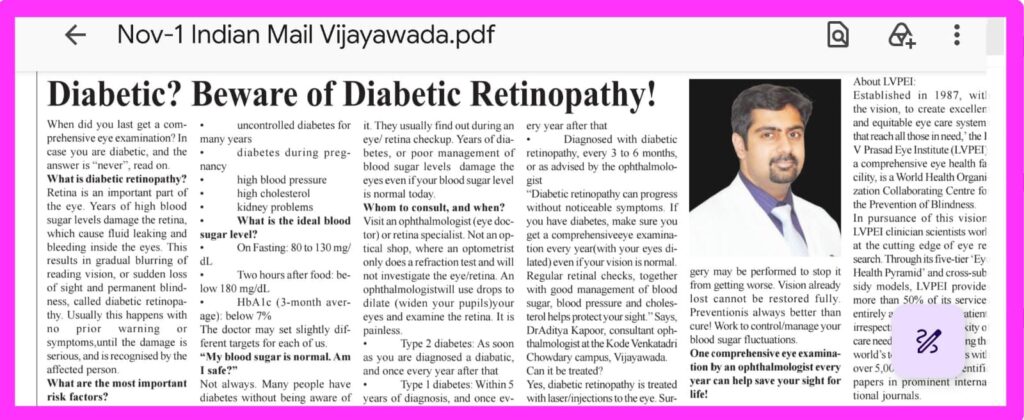
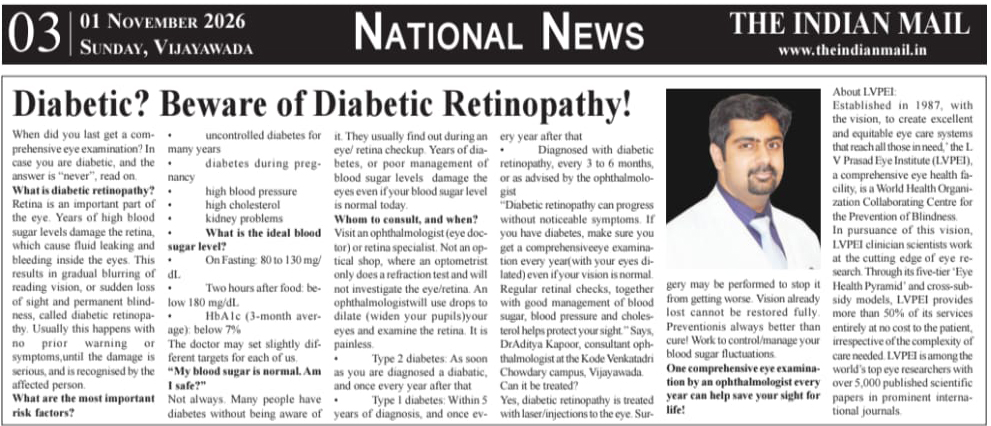
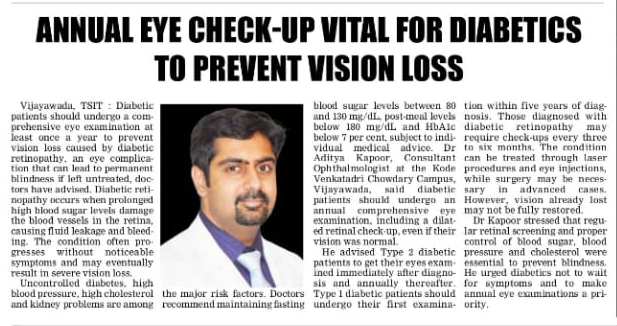
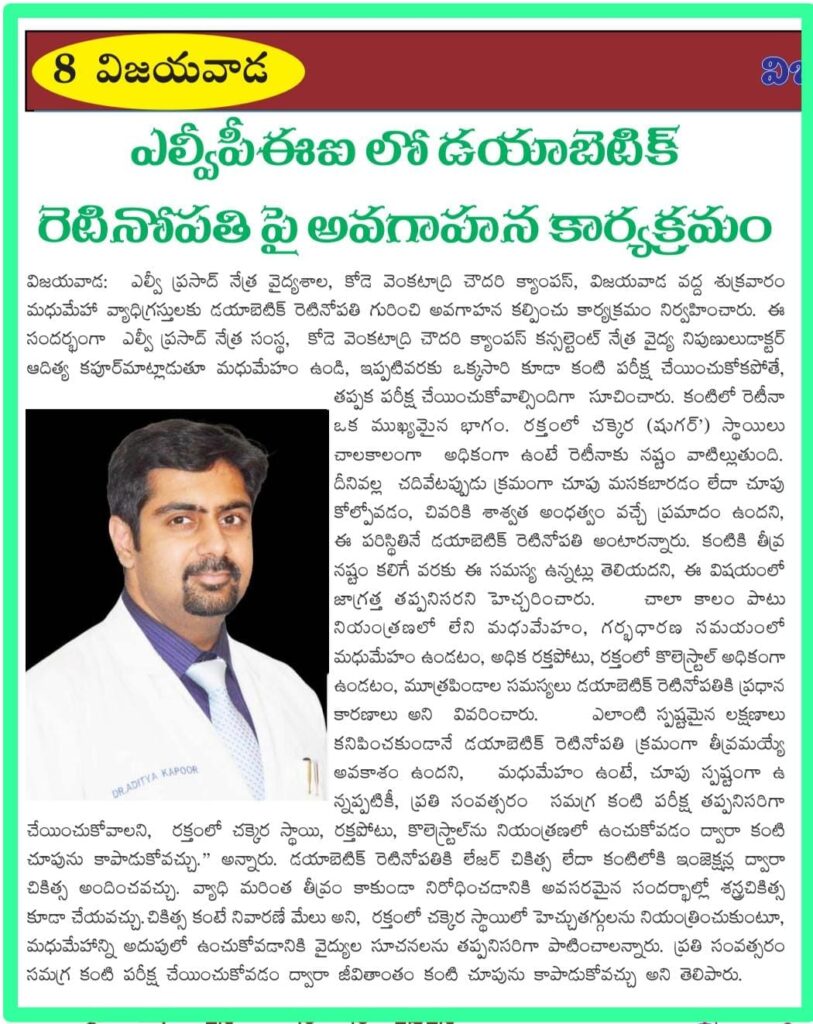
When did you last get a comprehensive eye examination? In case you are diabetic, and the answer is “never”, read on.
What is diabetic retinopathy?
Retina is an important part of the eye. Years of high blood sugar levels damage the retina, which cause fluid leaking and bleeding inside the eyes. This results in gradual blurring of reading vision, or sudden loss of sight and permanent blindness, called diabetic retinopathy. Usually this happens with no prior warning or symptoms, until the damage is serious, and is recognised by the affected person.
What are the most important risk factors?
What is the ideal blood sugar level?
“My blood sugar is normal. Am I safe?”
Not always. Many people have diabetes without being aware of it. They usually find out during an eye/ retina checkup. Years of diabetes, or poor management of blood sugar levels damage the eyes even if your blood sugar level is normal today.
Whom to consult, and when?
Visit an ophthalmologist (eye doctor) or retina specialist. Not an optical shop, where an optometrist only does a refraction test and will not investigate the eye/retina. An ophthalmologist will use drops to dilate (widen your pupils) your eyes and examine the retina. It is painless.
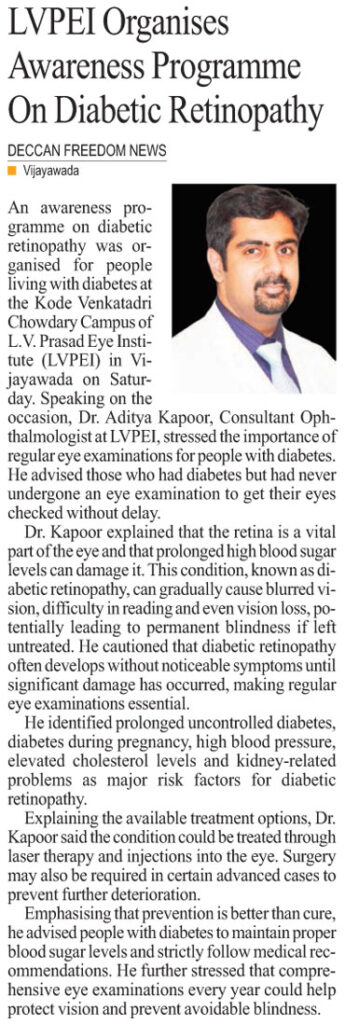
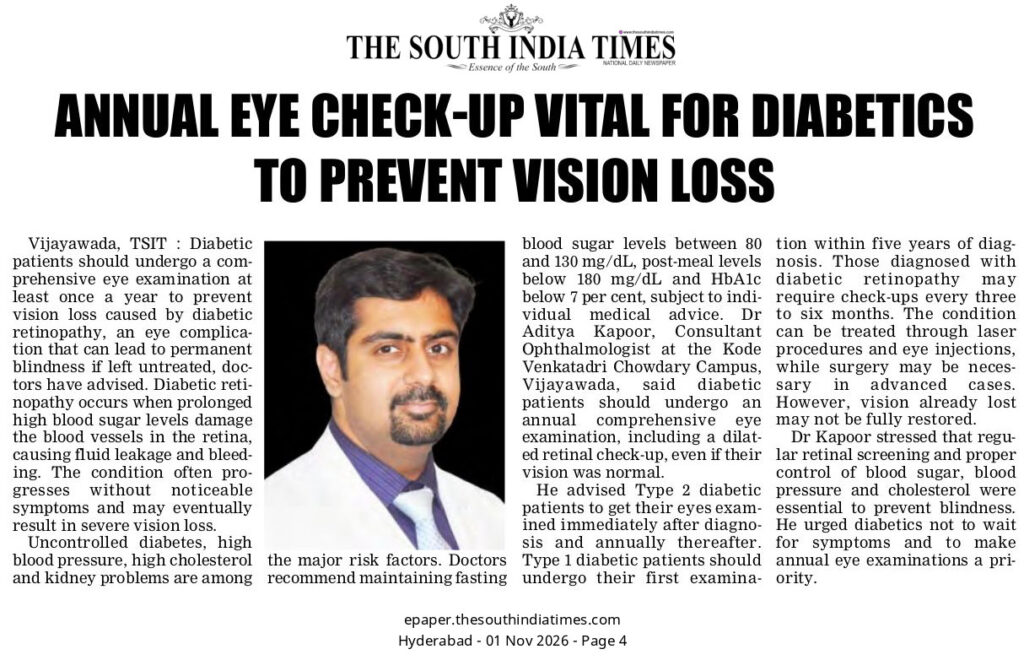
“Diabetic retinopathy can progress without noticeable symptoms. If you have diabetes, make sure you get a comprehensive eye examination every year (with your eyes dilated) even if your vision is normal. Regular retinal checks, together with good management of blood sugar, blood pressure and cholesterol helps protect your sight.” Says, Dr Aditya Kapoor, consultant ophthalmologist at the Kode Venkatadri Chowdary campus, Vijayawada.
Can it be treated?
Yes, diabetic retinopathy is treated with laser/injections to the eye. Surgery may be performed to stop it from getting worse. Vision already lost cannot be restored fully. Prevention is always better than cure! Work to control/manage your blood sugar fluctuations.
One comprehensive eye examination by an ophthalmologist every year can help save your sight for life!
About LVPEI:
Established in 1987, with the vision, to create excellent and equitable eye care systems that reach all those in need,’ the L V Prasad Eye Institute (LVPEI), a comprehensive eye health facility, is a World Health Organization Collaborating Centre for the Prevention of Blindness.
In pursuance of this vision, LVPEI clinician scientists work at the cutting edge of eye research. Through its five-tier ‘Eye Health Pyramid’ and cross-subsidy models, LVPEI provides more than 50% of its services entirely at no cost to the patient, irrespective of the complexity of care needed. LVPEI is among the world’s top eye researchers with over 5,000 published scientific papers in prominent international journals.
Contact: Aneetha Kanukolanu
Associate Director- Network Communications
Phone: +91 40 6810 2272
Email: aneetha.kanukolanu@lvpei.org
Website: www.lvpei.org