LVPEI Redesignated WHO Collaborating Centre for the Prevention of Blindness

Published 4th August 2026
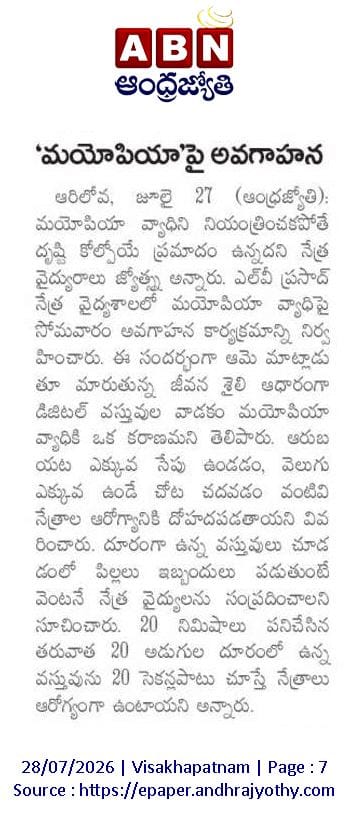
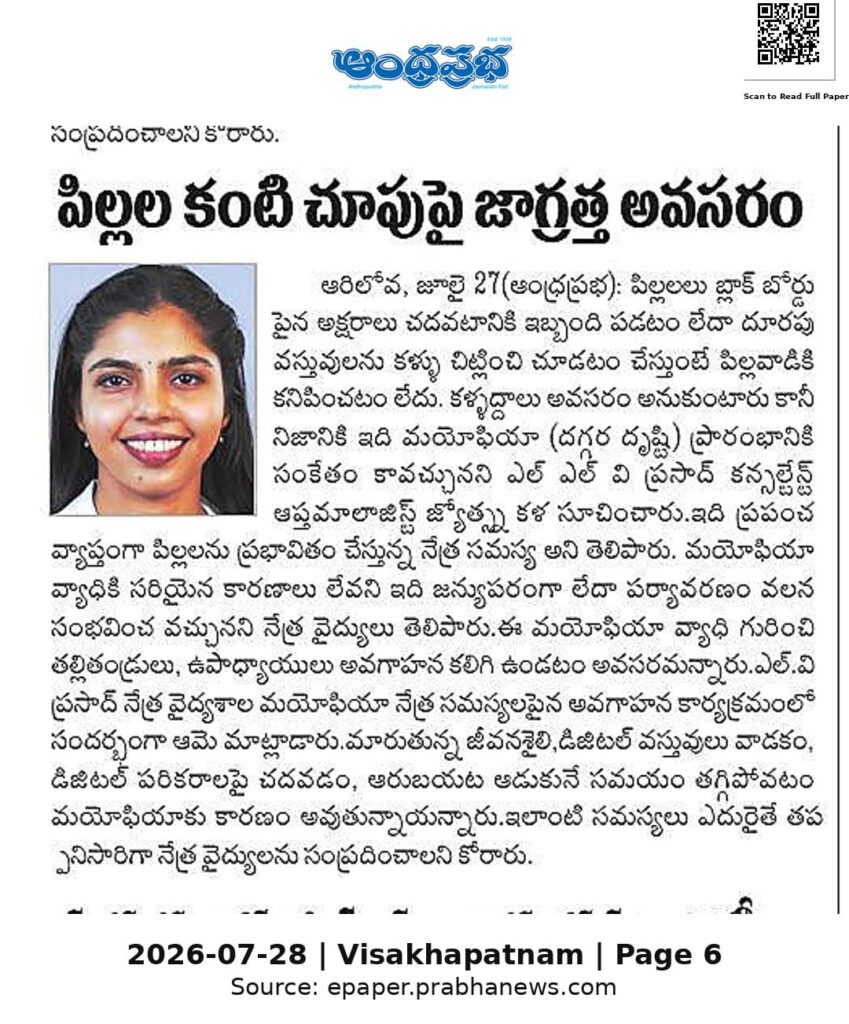
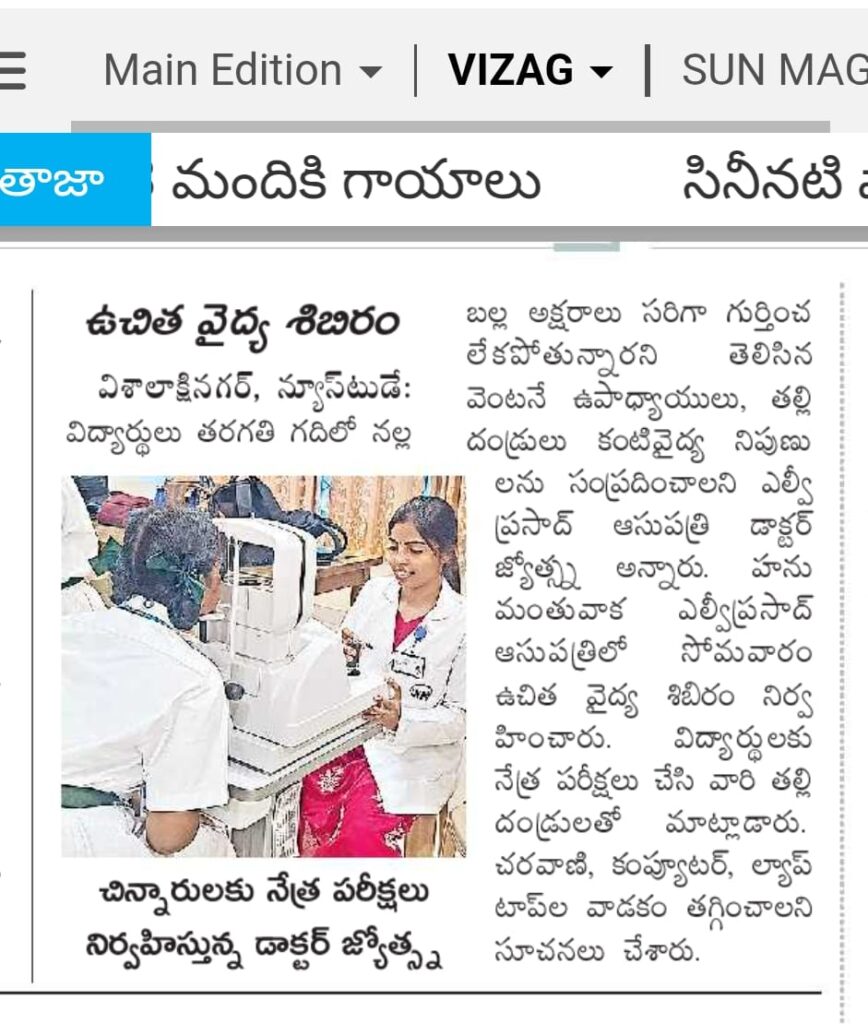
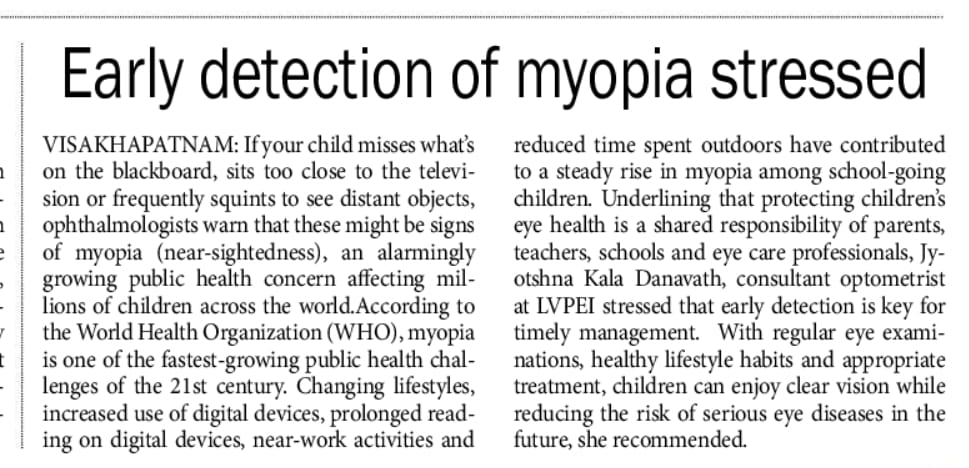
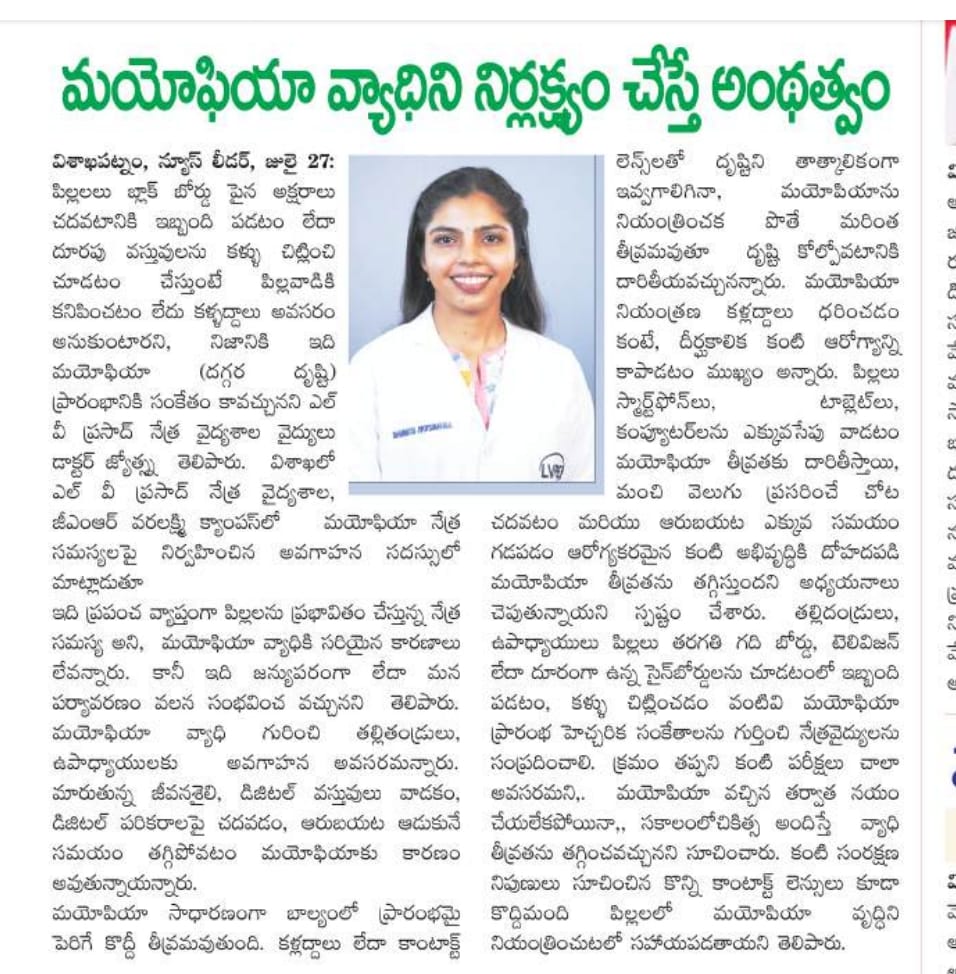
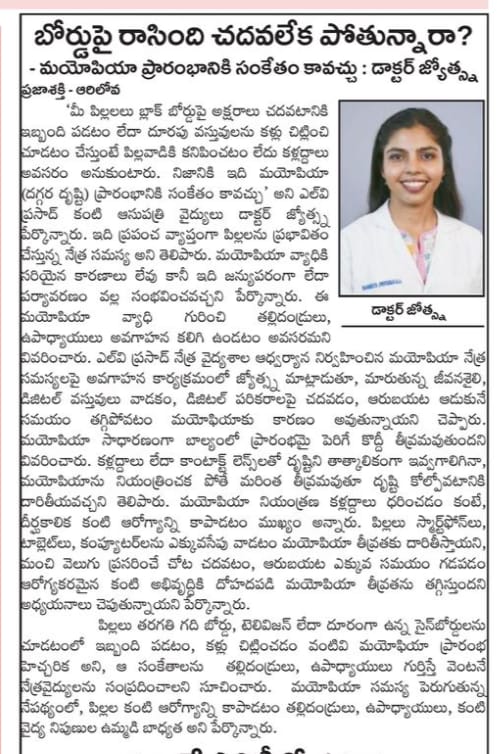
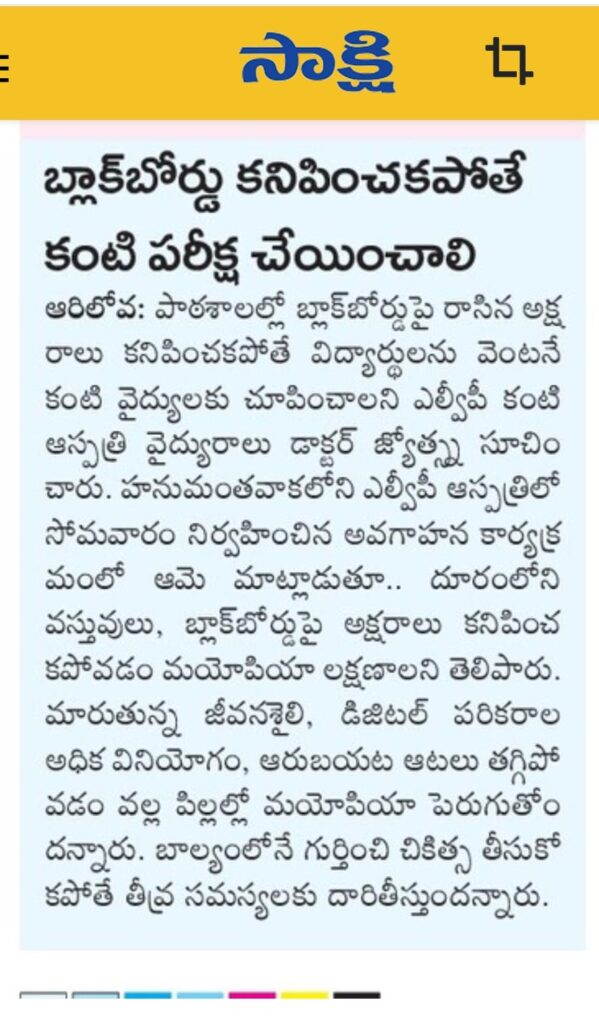
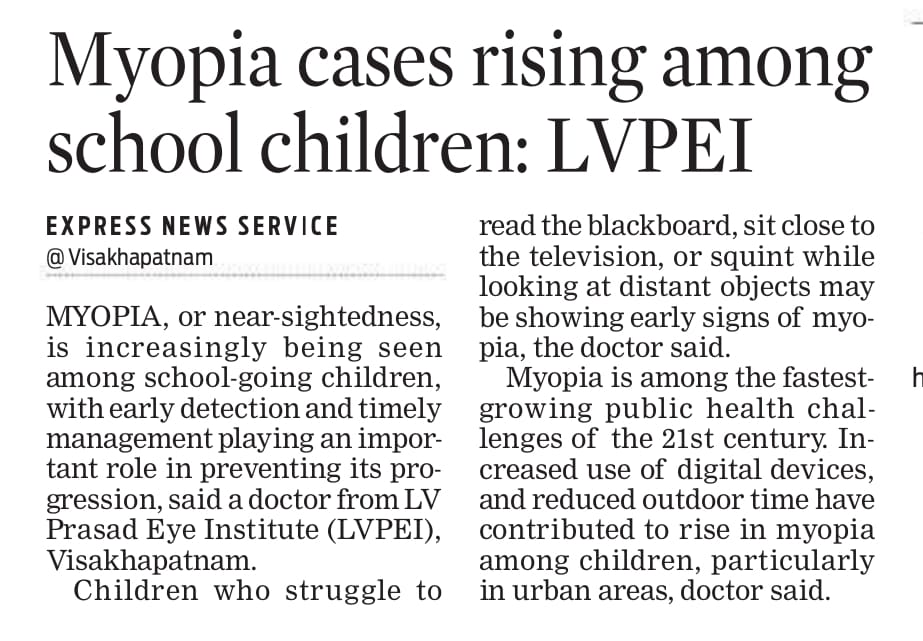
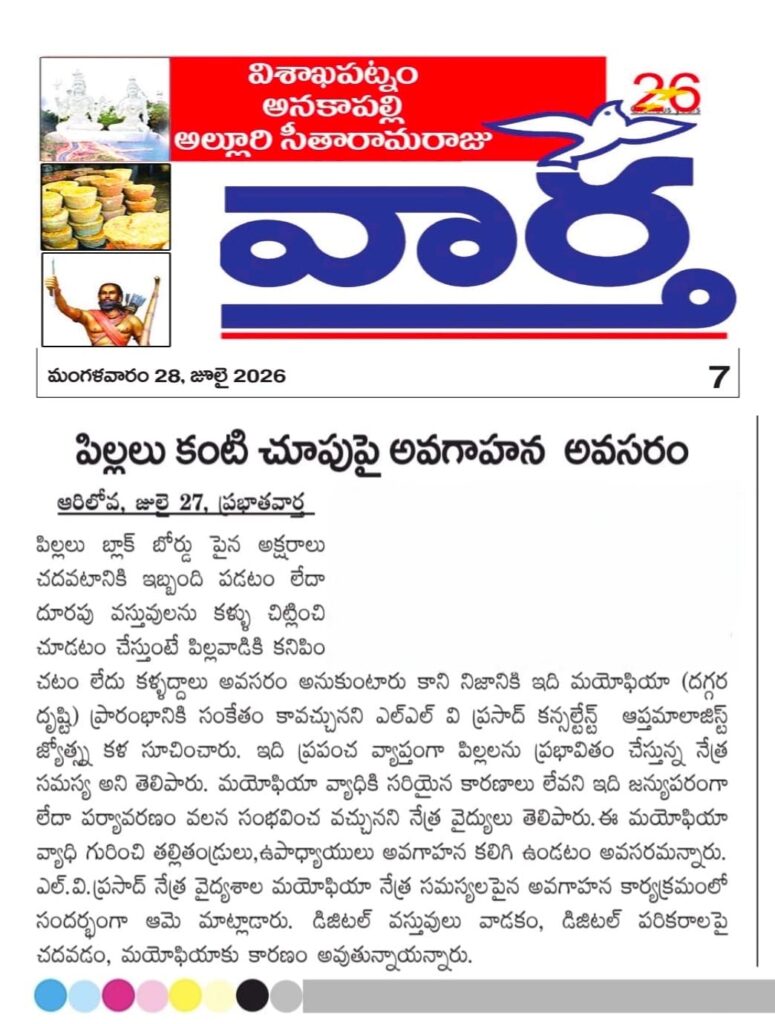
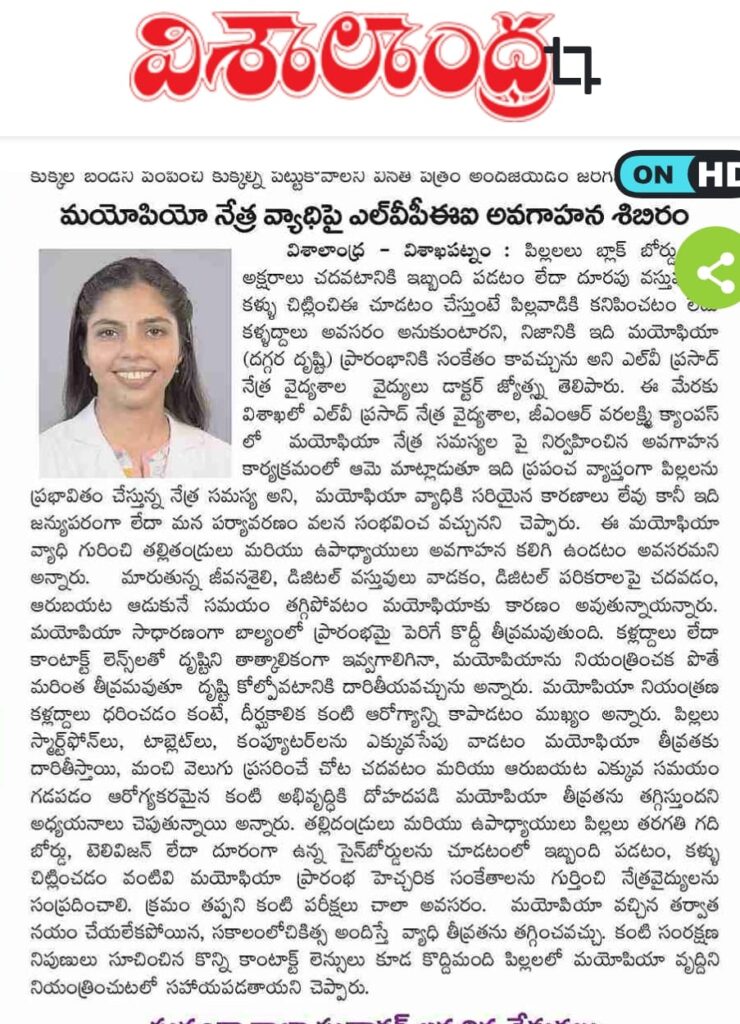
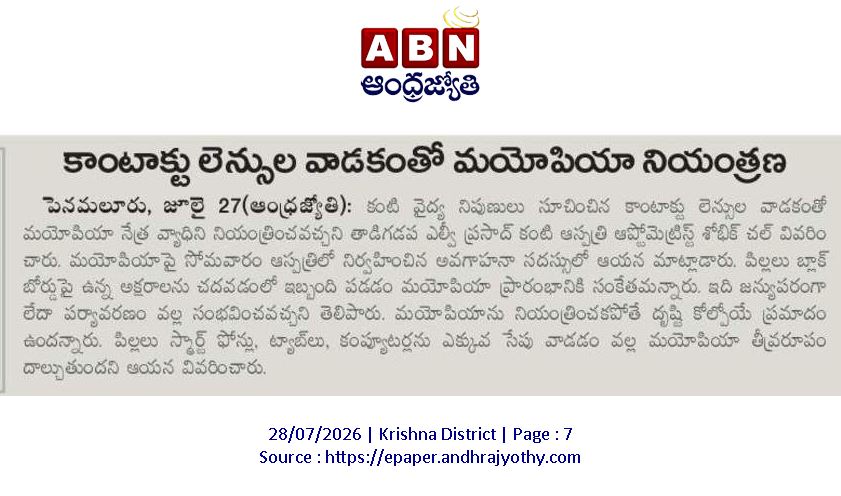
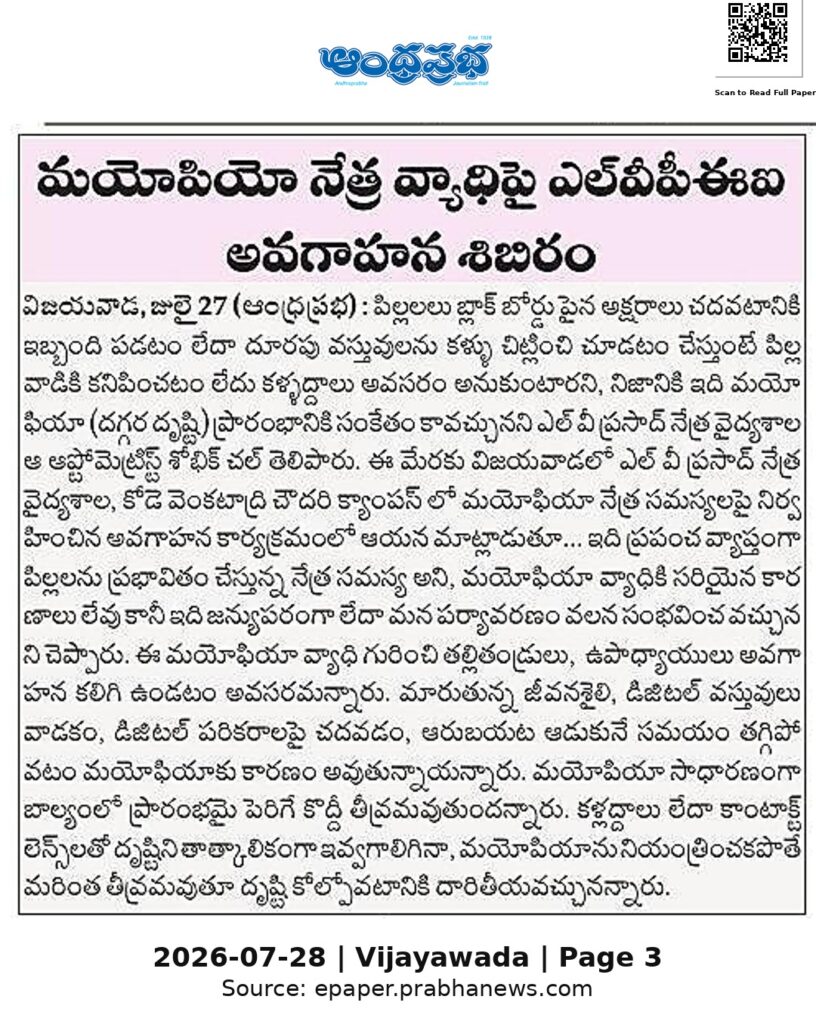
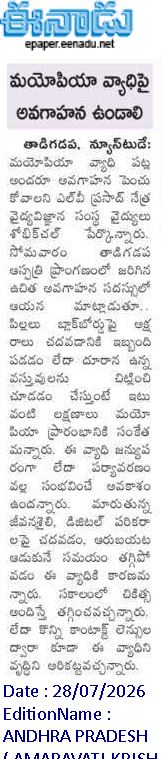
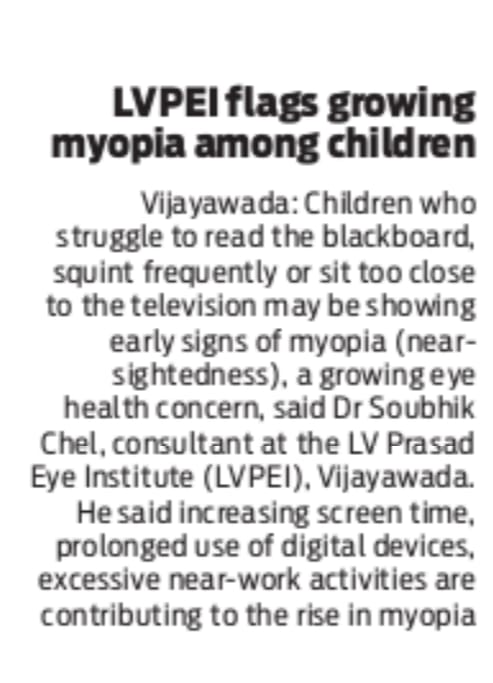
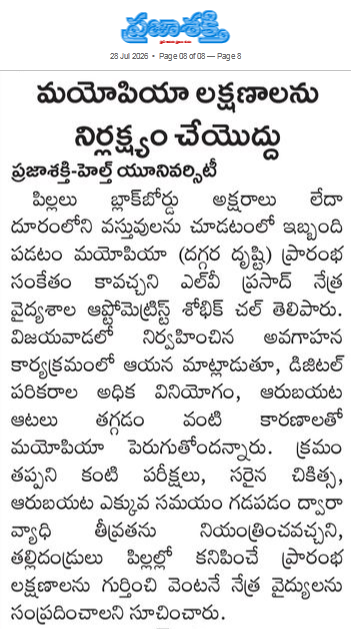
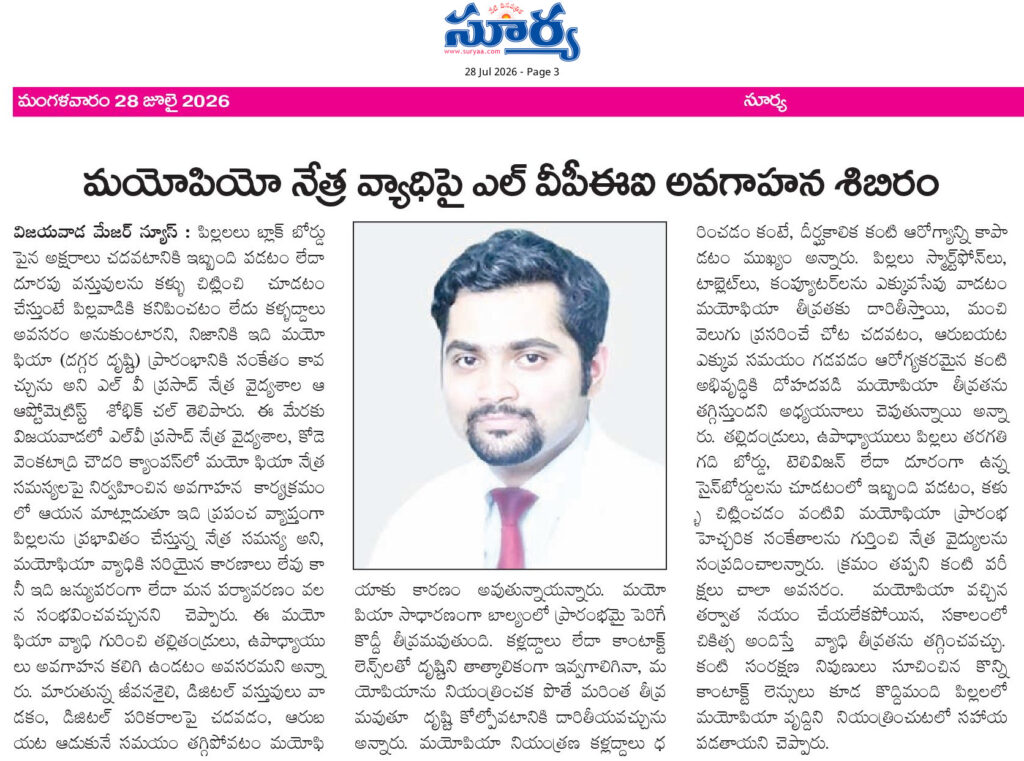
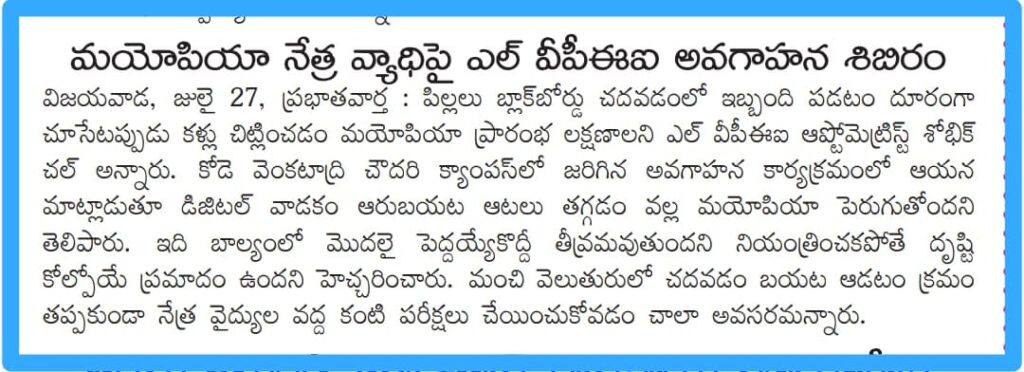
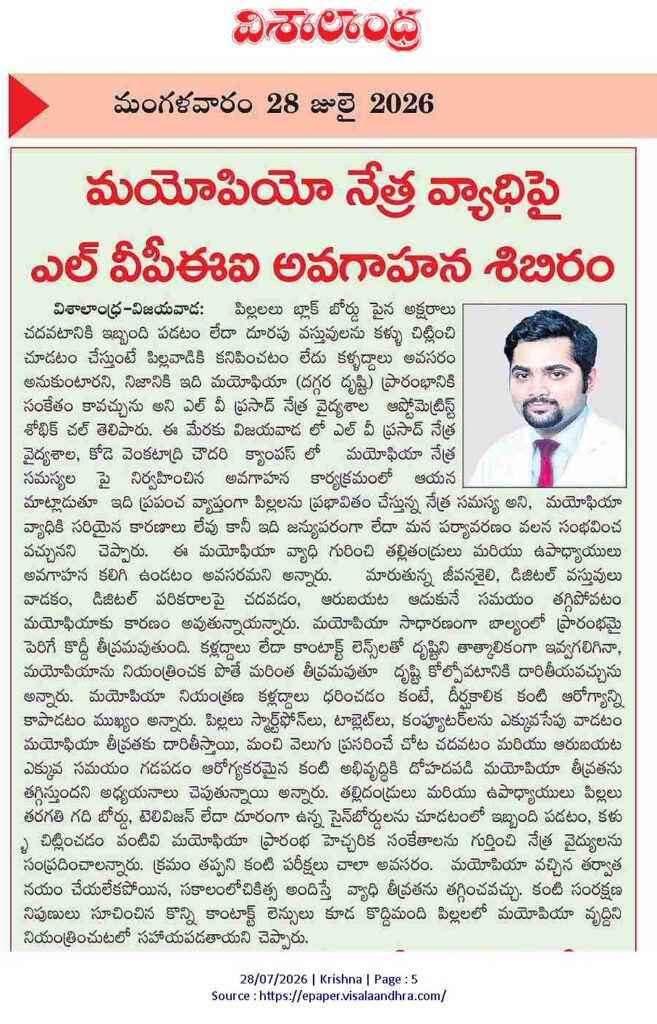
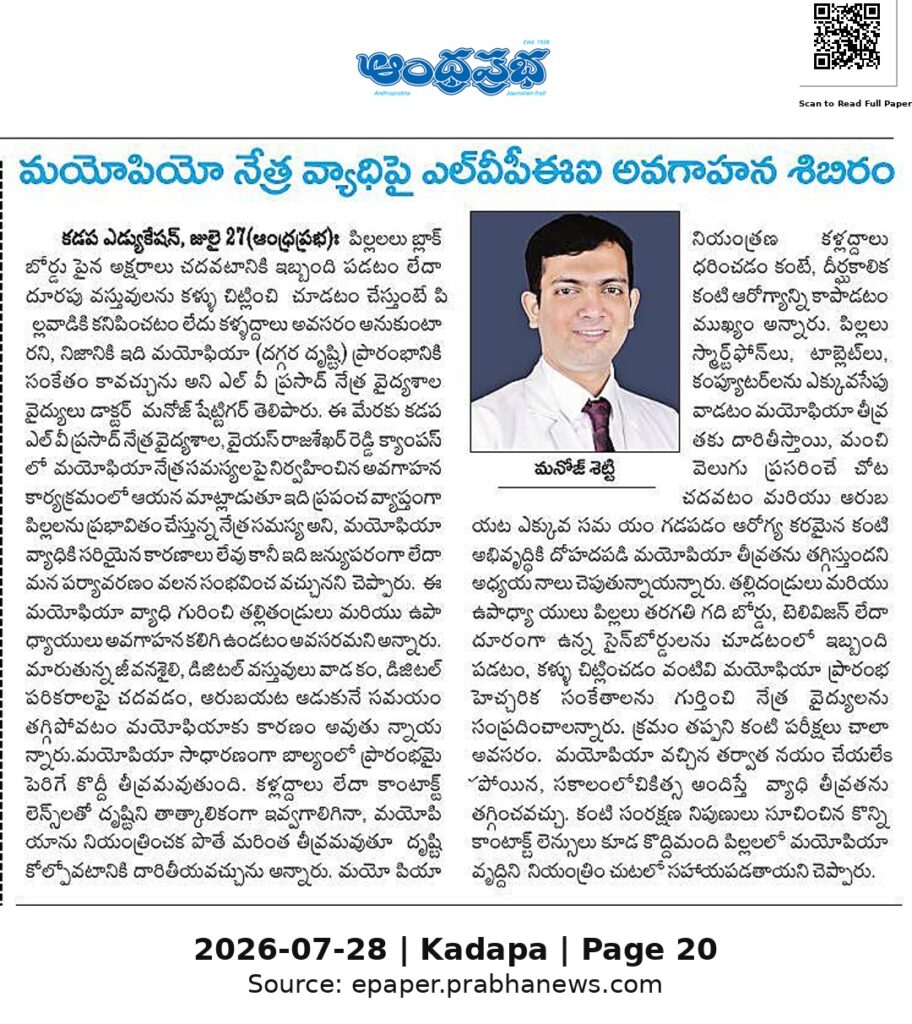
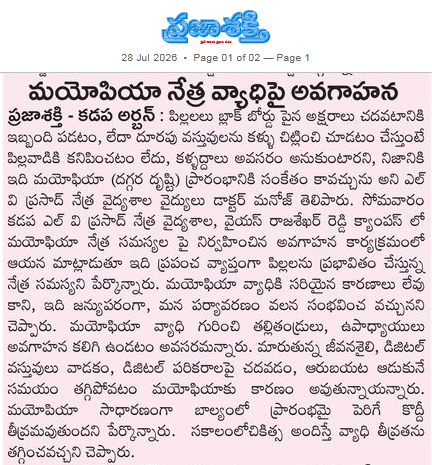
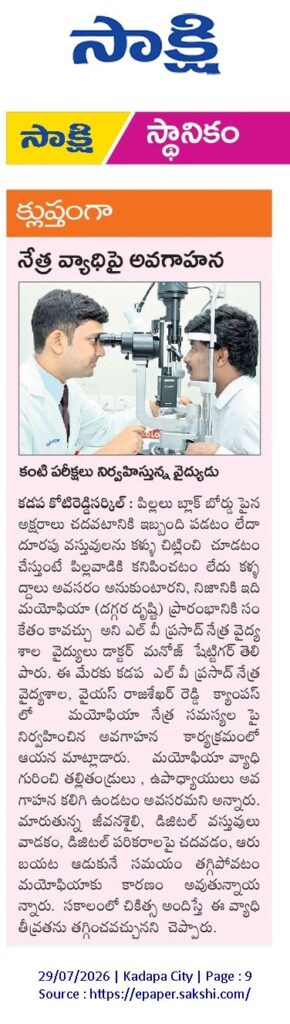
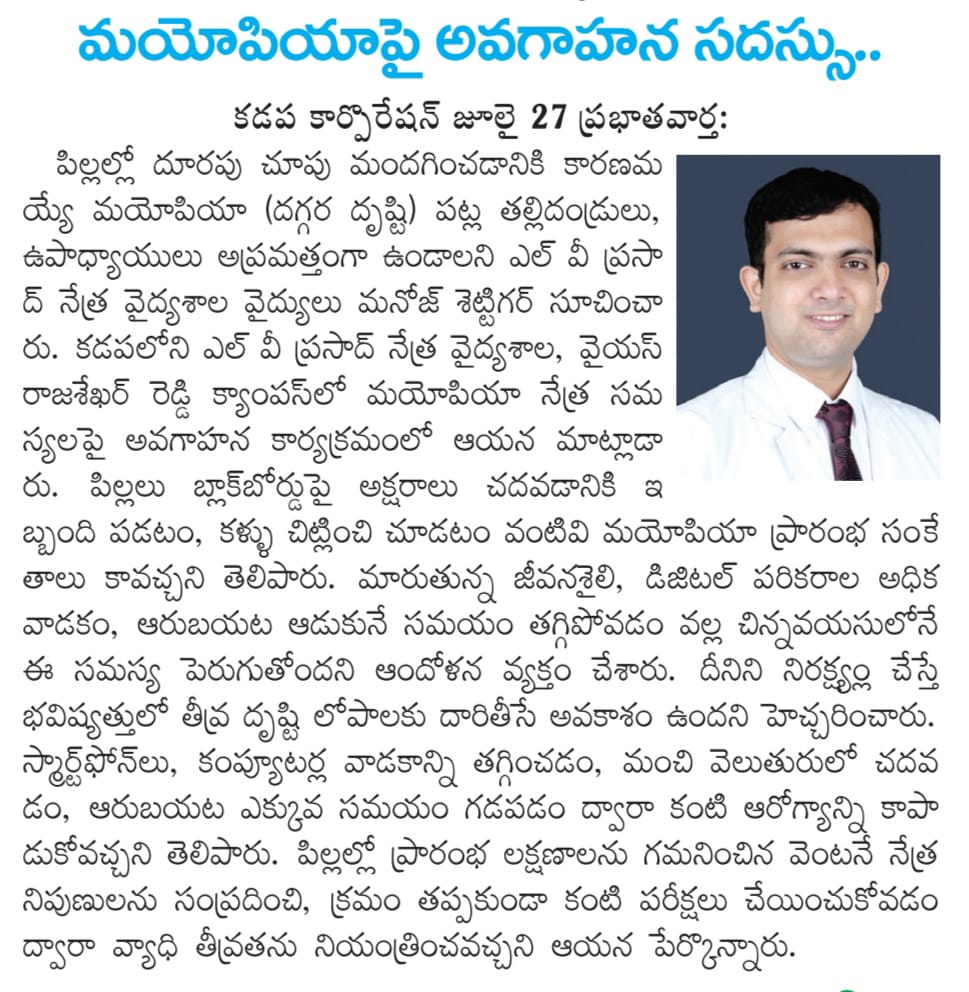
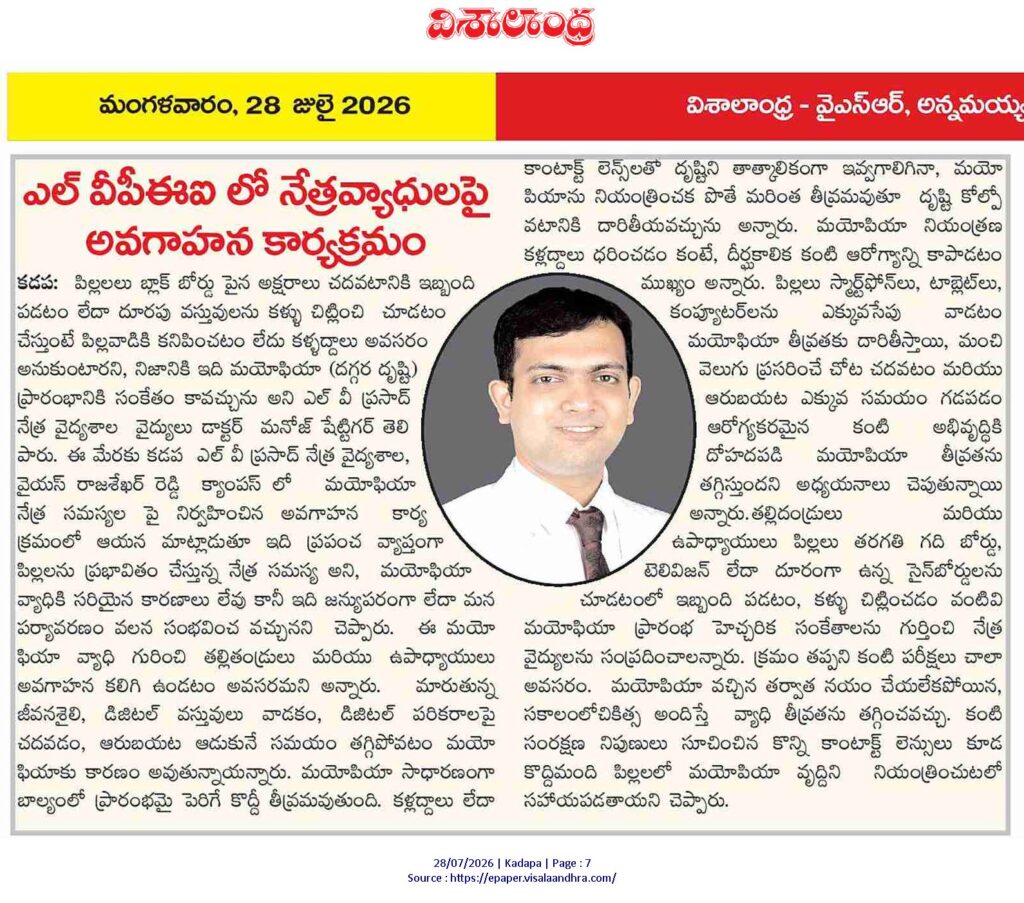
A child who struggles to read the blackboard, sits too close to the television, or frequently squints to see distant objects is often thought to simply need glasses. However, these may be early signs of myopia (near-sightedness), a rapidly growing public health concern affecting millions of children worldwide.
According to the World Health Organization (WHO), myopia is one of the fastest-growing public health challenges of the 21st century. Changing lifestyles, increased use of digital devices, prolonged reading on digital devices, other near-work activities, and reduced time spent outdoors have contributed to a steady rise in myopia among school-going children, particularly in urban areas. This makes awareness among parents, teachers, and caregivers more important than ever.
Myopia is a condition in which distant objects appear blurred while nearby objects remain clear. It usually begins during childhood and often progresses as children grow. Although vision can be corrected with spectacles or contact lenses, myopia itself may continue to worsen if left unmanaged. Myopia management is about protecting a child’s long-term eye health, rather than about wearing glasses.
The exact cause of myopia is not fully understood, but both genetic and environmental factors are known to contribute. Children with one or both parents having myopia are at greater risk. Lifestyle habits such as prolonged use of smartphones, tablets, computers, excessive near work, and limited exposure to natural daylight can also increase the likelihood of developing and progressing myopia. Studies have shown that spending more time outdoors helps support healthy eye development and may reduce the risk of myopia progression.
Parents and teachers should watch for early signs. A child with myopia may have difficulty seeing the classroom board, television, or distant signboards. Frequent squinting, excessive blinking, rubbing the eyes, sitting very close to the television, holding books or mobile phones unusually close, or avoiding activities that require distance vision may all indicate a vision problem. Since children often do not realize that their vision is abnormal, regular eye examinations are essential.
Early detection is important because progressive myopia can lead to high myopia, generally defined as a spectacle power of -6.00 diopters or more. High myopia significantly increases the lifetime risk of serious eye diseases such as retinal detachment, glaucoma, cataract, and myopic macular degeneration, which can permanently affect vision.
Although myopia cannot be cured once it develops, its progression can often be slowed with timely intervention. The first step is providing appropriate spectacle correction. In addition to conventional glasses, specially designed myopia-control spectacle lenses help slow the growth of the eye. Certain contact lenses prescribed by eye care professionals can also help control myopia progression in a few children.
Low-dose atropine eye drops are another evidence-based option for slowing myopia progression. Treatment is tailored to each child and therapies are prescribed and monitored by an ophthalmologist or optometrist.
Healthy daily habits also play a vital role in protecting children’s vision. Encourage children to spend at least two hours outdoors each day, limiting unnecessary screen time, maintaining a proper reading distance, using adequate lighting, and taking regular breaks during prolonged near work. A simple practice of the 20-20-20 rule, which is to look at an object at least 20 feet away for 20 seconds, every 20 minutes of near work.
Teachers are often the first to notice vision problems in school. A student who struggles to copy from the blackboard, frequently requests a front-row seat, or shows declining classroom performance may simply need an eye examination. Schools can further support children’s eye health by including outdoor activities in their daily timetable, ensuring the classrooms are well-lit and organizing periodic vision screening in the school. Routine comprehensive eye examinations before school entry and at regular intervals during the school year helps identify vision problems before they interfere with learning and development. Children with a family history of myopia or those whose spectacle power changes frequently require closer follow-up.
Protecting children’s eye health is the shared responsibility of parents, teachers, schools, and eye care professionals. All of us have to be vigilant to slight changes in children’s behaviour and enable early detection of myopia and timely management. With regular eye examinations, healthy lifestyle habits, and appropriate treatment, children can enjoy clear vision today alongside reducing the risk of serious eye diseases in the future.
A clear view of the blackboard today can help ensure a healthier vision tomorrow.
About LVPEI: Established in 1987, with the vision, ‘to create excellent and equitable eye care systems that reach all those in need,’ the L V Prasad Eye Institute (LVPEI), a comprehensive eye health facility, is a World Health Organization Collaborating Centre for the Prevention of Blindness.
In pursuance of this vision, LVPEI clinician scientists work at the cutting edge of eye research. Through its five-tier ‘Eye Health Pyramid’ and cross-subsidy models, LVPEI provides more than 50% of its services entirely at no cost to the patient, irrespective of the complexity of care needed. LVPEI is among the world’s top eye researchers with over 5,000 published scientific papers in prominent international journals.
For further information, please visit the Institute’s website, www.lvpei.org.
Contact: Aneetha Kanukolanu, Associate Director- Network Communications
Phone: +91 40 6810 2272
Email: aneetha.kanukolanu@lvpei.org
Website: www.lvpei.org