Trojan Horses
Written by Soujanya Padikkal
Published 28th May 2026
Researchers from University of Hyderabad and LV Prasad Eye Institute explore the possible molecular interaction between retinoblastoma-derived vesicles and bone marrow stem cells derived exosomes to understand how the cancer spreads and thrives at a metastatic site in the body.
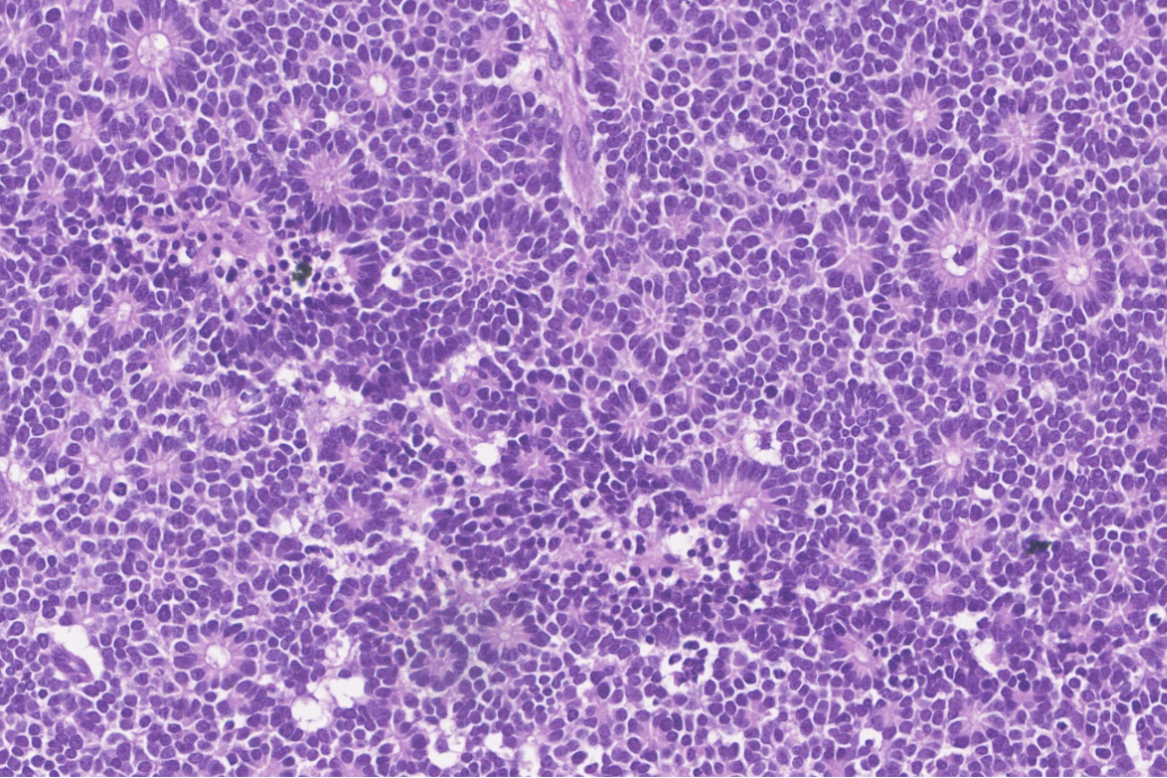
Cancer cells have one goal — survival. But they rarely achieve this on their own. They manipulate the tissue they invade to grow, spread and resist treatment. Take retinoblastoma, the most common eye cancer in children. While the disease is treatable when confined to the eye, in advanced cases, it spills into the bloodstream and spreads to other organs.
The bone marrow is the most common site-target for such ‘rogue’ retinoblastoma cells. This is where all blood cells are produced by the body. Once they reach the marrow, treatment is difficult with survival rates declining sharply.
Cancer cells manipulate their environment to achieve one goal–survival.
It is not an easy task for tumor cells to metastasize (spread from their primary site to other, distant sites). Tumour cells must first escape from the primary site, reach the blood vessels, evade immune cells, enter a new site, create a niche for themselves, and grow at the metastatic site.
This requires the tumour to actively shape its surroundings by suppressing immune responses, ensuring constant blood supply, and seeking support from the resident cells. One of the key residents it encounters and reprograms are bone marrow derived mesenchymal cells (BM-MSCs)–repair cells that normally migrate to the site of injury and help in healing. Multiple factors contribute to an environment where the tumour can thrive.
Among them small extracellular vesicles (sEVs) – membrane bound packages released by cells that act as molecular messengers – have drawn interest.
In a study published in the International Journal of Molecular Sciences, Jyothi Attem (a PhD Scholar under Prof Geeta K. Vemuganti from the University of Hyderabad) in collaboration with Swathi Kaliki from LVPEI explores if signalling between retinoblastoma derived vesicles and BM MSCs help create an environment that promotes tumor survival at metastatic sites.
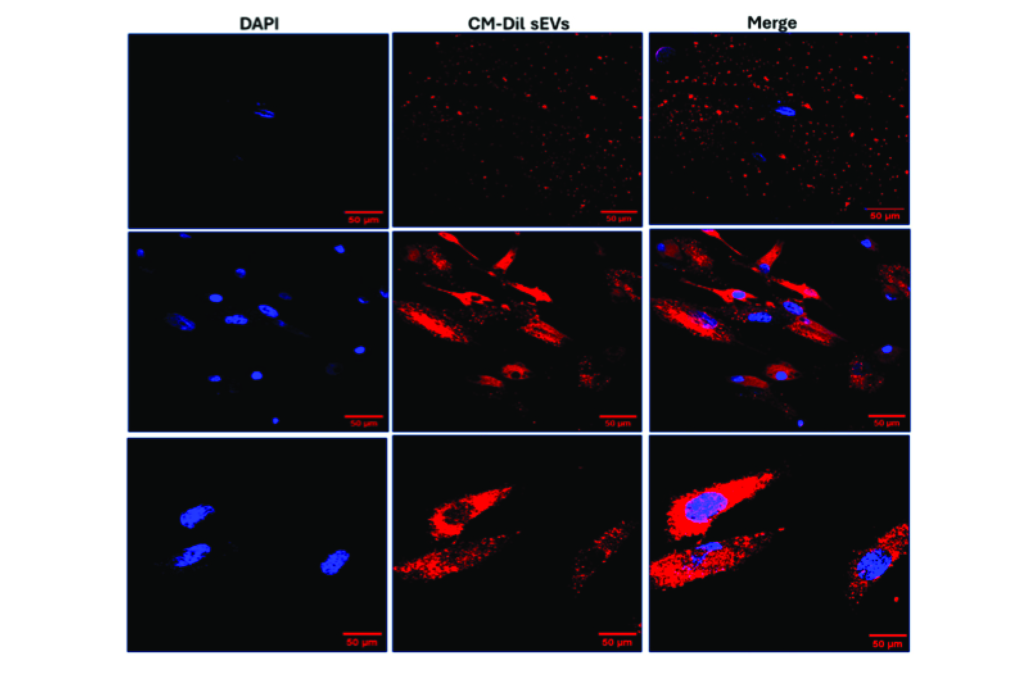
They isolated vesicles from both and exposed each cell type to the other’s vesicles in lab-based cellular assays and molecular experiments. The findings revealed a reciprocal relationship. When bone marrow stem cells absorbed tumor vesicles, they became more migratory and began expressing proteins associated with cancer cells.
The study suggests communication between the tumor cells and host cells which seemed to be ‘pro-tumorogenic.’
The exchange also worked in reverse: vesicles released by the bone marrow stroma cells were similarly internalized by the tumor cells which showed enhanced proliferation and were more invasive.
The tumour cells also showed increased expression of proteins associated with cancer stem cells as documented by their ability to form colonies and tumor-like spheres. All these point towards the synergistic role of bone marrow cells in helping the tumour cells to survive, expand and resist chemotherapy with the emergence of cancer stem cell properties.
The study suggests communication between the tumor cells and host cells seem to be ‘pro-tumorogenic.’ There seems to be an active engagement of tumor cells with the host cell through the secreted exosomes at the preferred metastatic site which could alter a microenvironment to ensure its continuous survival.
‘The paper provides novel insights into the pro tumorigenic interactions between the exosomes of Rb tumor cells and bone marrow mesenchymal cells in an in-vitro model,’ notes Prof. Geeta K Vemuganti, Distinguished Pathologist and Scientist at LVPEI and the corresponding author of the paper. ‘This could possibly be explored further for potential targeting of cells using exosomes as drug vehicles.’
Citation
Attem J, Jogula RMR, Kaliki S, Vemuganti GK. Pro-Tumorigenic Signaling Between Small Extracellular Vesicles of Cancer Cells and Bone Marrow-Derived Mesenchymal Stem Cells-An In Vitro Study. Int J Mol Sci. 2026 Mar 13;27(6):2654. doi: 10.3390/ijms27062654. PMID: 41898516; PMCID: PMC13026775.