
Biography
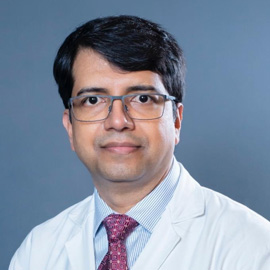
Dr Muralidhar Ramappa, MD, is a senior academic ophthalmologist, clinician-scientist, and internationally recognized authority on pediatric corneal disorders, rare eye diseases, and anterior segment developmental anomalies. He currently serves as the Head of the Institute for Rare Eye Diseases and Ocular Genetics at the L V Prasad Eye Institute (LVPEI), Hyderabad, India. In this dual leadership role, Dr. Ramappa has built and led one of the most comprehensive and integrated programs in the world, focusing on the care of children with complex corneal and ocular surface conditions.
Dr Ramappa received his fellowship training in Cornea and Anterior Segment at LVPEI and subsequently completed advanced fellowships in Cataract and Refractive Surgery at the Magill Laser Vision Center, USA; Pediatric Ophthalmology at the Storm Eye Institute, MUSC; and Pediatric Corneal Disorders at UPMC Children’s Hospital, Pittsburgh. These diverse and rigorous training experiences across leading institutions have shaped his unique expertise and global perspective on pediatric eye care.
In 2007, Dr. Ramappa established the Pediatric Cornea Service at LVPEI, a pioneering initiative that has since transformed the landscape of childhood corneal blindness in India and its neighboring regions. Under his leadership, the service evolved into a global referral center for rare and severe ocular disorders affecting children. He has personally evaluated and treated thousands of children with visually disabling corneal and anterior segment conditions, offering not only surgical care but also long-term multidisciplinary management that integrates clinical evaluation, advanced imaging, ocular genetics, pathology, and rehabilitative strategies. His approach exemplifies a holistic and patient-centric model of pediatric ophthalmology in resource-constrained settings.
Dr Ramappa’s scientific work is deeply rooted in understanding the developmental biology of the human eye and in defining the genotype–phenotype relationships of congenital corneal anomalies. His team has contributed significantly to the characterization of several rare and complex disorders, including congenital hereditary endothelial dystrophy (CHED), Peters anomaly, aniridia, brittle cornea syndrome, and cornea plana. He has described novel phenotypes, such as CYP1B1 cytopathy, which represents a distinct structural disorder of the posterior cornea and anterior segment and is now recognized internationally. He maintains one of the largest integrated clinical and genetic datasets on rare corneal diseases including CHED, congenital hereditary stromal dystrophy (CHSD), PPCD, anterior segment dysgenesis (AXR) spectrum disorders, keratoglobus, corneal keloids, congenital corneal anesthesia, epidermolysis bullosa, and ectodermal dysplasia.
His translational research spans a wide spectrum of corneal dystrophies and degenerations, including epithelial basement membrane dystrophy (EBMD), anterior basement membrane dystrophy (ABMD), CHED, CHSD, posterior polymorphous corneal dystrophy (PPCD), granular dystrophy, lattice dystrophy, Schnyder’s crystalline corneal dystrophy, X-linked corneal endothelial dystrophy (XCED), and gelatinous drop-like keratopathy (GDLD). He is currently spearheading the development of a pediatric corneal single-cell transcriptomic atlas aimed at mapping the transcriptional regulators involved in ocular development and disease. His work on understanding the biomechanical impact of diabetes on the cornea has opened new avenues for early diagnosis and intervention in diabetic eye disease.
Dr Ramappa is also a pioneering surgical innovator. He has developed and standardized several advanced pediatric procedures that have significantly improved visual outcomes and graft survival in the pediatric population. These include Selective Endothelialectomy in Peters Anomaly (SEPA), limbo-keratoplasty for sclerocornea, pediatric Descemet stripping automated endothelial keratoplasty (DSAEK), deep anterior lamellar keratoplasty (DALK), sclerotherapy for implantation cysts, and a unique nail technique for stable iris claw intraocular lens fixation. These innovations, many of which are first-of-their-kind in pediatric settings, have been widely published and adopted internationally, thereby setting new standards for pediatric keratoplasty and anterior segment surgery.
He is the Principal Investigator on multiple research projects supported by national and international agencies, including the Indian Council of Medical Research (ICMR), Department of Biotechnology (DBT), Sight Life, and the International Agency for the Prevention of Blindness (IAPB). His work includes clinical trials, such as a Phase II industry-sponsored trial evaluating topical NSAIDs for CHED, as well as research initiatives in genetics, immunology, developmental biology, and regenerative therapies.
Dr Ramappa is a prolific academician with over 150 peer-reviewed publications and several textbook chapters. He is a sought-after speaker and surgical instructor at national and international ophthalmology conferences and serves on the editorial boards and peer review panels of several high-impact journals. His international collaborations with experts such as Dr. Ken Nischal, Dr. Edward Wilson, and Dr. Deepak Edward reflect the global scope and impact of his work. He has trained over 250 fellows and residents, many of whom now occupy leadership positions in ophthalmology in India and abroad. His dedication to training and mentoring the next generation of ophthalmologists underscores his commitment to sustainable capacity building in global eye care.
Dr Ramappa has received more than 45 national and international awards for his contributions to ophthalmology. These include the Senior Achievement Award from the American Academy of Ophthalmology (AAO), the International Hero Award from the All-India Ophthalmological Society (AIOS) on three occasions, the Vaidya Ratna Award from the Mother Teresa Foundation, and Distinguished Service Awards from various professional organizations. His work embodies the mission of LVPEI: delivering equitable, world-class eye care through excellence in clinical care, research, innovation, and education. His enduring commitment to restoring vision in children with complex eye diseases continues to inspire his peers, trainees, and countless families, positioning him as one of the foremost authorities in pediatric ophthalmology worldwide.