A Prediction Model for ROP
Written by Soujanya Padikkal
Published 26th November 2026
Researchers from LVPEI in collaboration with CognitiveCare Inc. and Tufts University, School of Medicine, Boston develop a machine learning model to identify premature babies at risk of developing retinopathy of prematurity.
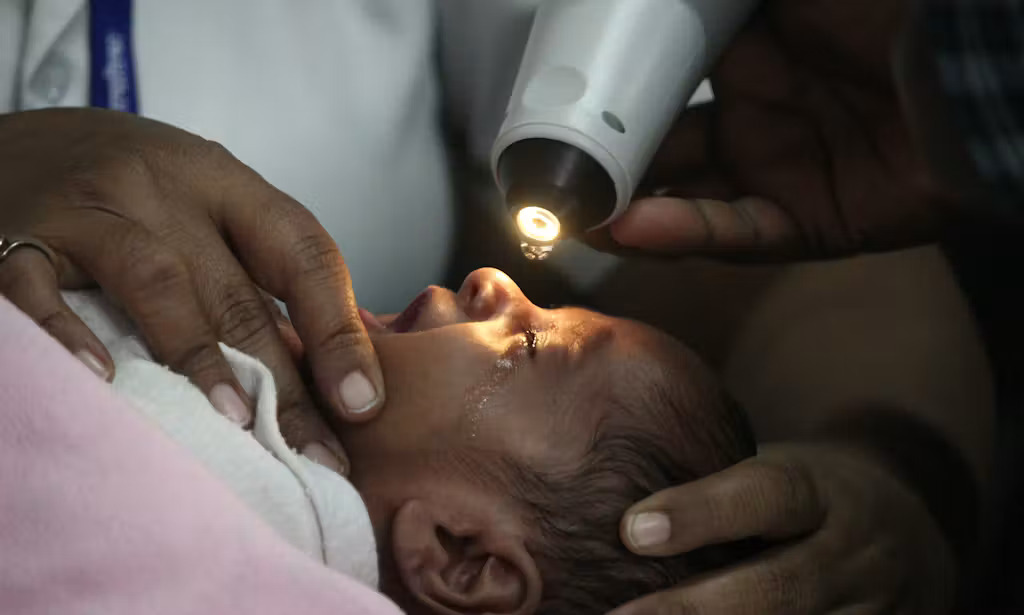
An estimated 1 in 10 babies are born before 37 weeks of pregnancy—a preterm baby. In some of them, the blood vessels in the retina, the light-sensitive layer at the back of the eye, develop abnormally in a condition called retinopathy of prematurity (ROP). The retina’s blood vessels usually develop until full-term, but a premature birth disrupts this healthy development.
The sudden change in oxygen levels outside the womb, along with an unregulated supply of supplemental oxygen in intensive care, may also trigger the development of abnormal blood vessels. In essence, many factors can trigger the onset of early ROP, with no obvious signs or symptoms. Early ROP can only be detected through an eye examination by a ROP-trained specialist. While many cases resolve on their own, advanced cases can cause permanent vision loss if left untreated.
Early screening is therefore important, which can be difficult in low- and middle-income countries (LMICs), where there is an acute shortage of such specialists.
In essence, many factors can trigger the onset of early ROP, with no obvious signs or symptoms.
One way to address this challenge is through machine learning (ML), a branch of artificial intelligence where computers identify patterns in data and use them to make predictions. For example, in ophthalmology, ML models can analyze images of the eye to detect signs of various eye conditions.Such models can also be trained on information collected from the patient, like medical history, lab results, and other clinical details to predict the likelihood of a condition.
Could this approach be used to identify babies at risk of developing ROP and requiring treatment?
In a new study published in Pediatric Research, Tapas R. Padhi and colleagues from LVPEI along with Naresh Nelaturi from CognitiveCare and Errol Norwitz from Tufts University developed a non-image-based, ML-led framework to flag newborns at risk of ROP. They used 23,404 medical records from 9,205 newborns admitted to 25 neonatal care units across 15 districts in Odisha and designed a two-step model using information from these records.
The findings suggest that the framework could help identify babies who may need monitoring, particularly in resource-limited settings.
The first step used details like birthweight, gestational age, oxygen therapy, and other clinical information to predict whether a baby would develop ROP. In the second step, they added findings from specialist eye examinations, including the stage and location of ROP and the presence of plus disease (thickening, swelling and twisting of blood vessels), to predict whether treatment would be needed.
They also compared eight types of ML models and selected the best-performing one for each step. They then tested the combined approach on 515 newborns from records that had not been used to train the models. The model correctly identified 78.2% of babies who needed treatment when tested on the retrospective dataset. In the prospective group, it identified 437 babies with treatment-requiring ROP, achieving a sensitivity (a ‘true’ positive) of 84.9%.
The findings suggest that the framework could help identify babies who may need monitoring, particularly in resource-limited settings. The authors however point that the model is meant to support ROP-trained specialists, and their expertise should take precedence over the model with all premature infants continuing to receive routine screening based on ROP existing guidelines.
Citation
Padhi, T.R., Nelaturi, N., Teltumbade, M. et al. Prediction of retinopathy of prematurity using machine learning models. Pediatr Res (2026). https://doi.org/10.1038/s41390-026-05413-6
Photo credit: LVPEI