Retinoblastoma
Last updated: 13th May 2026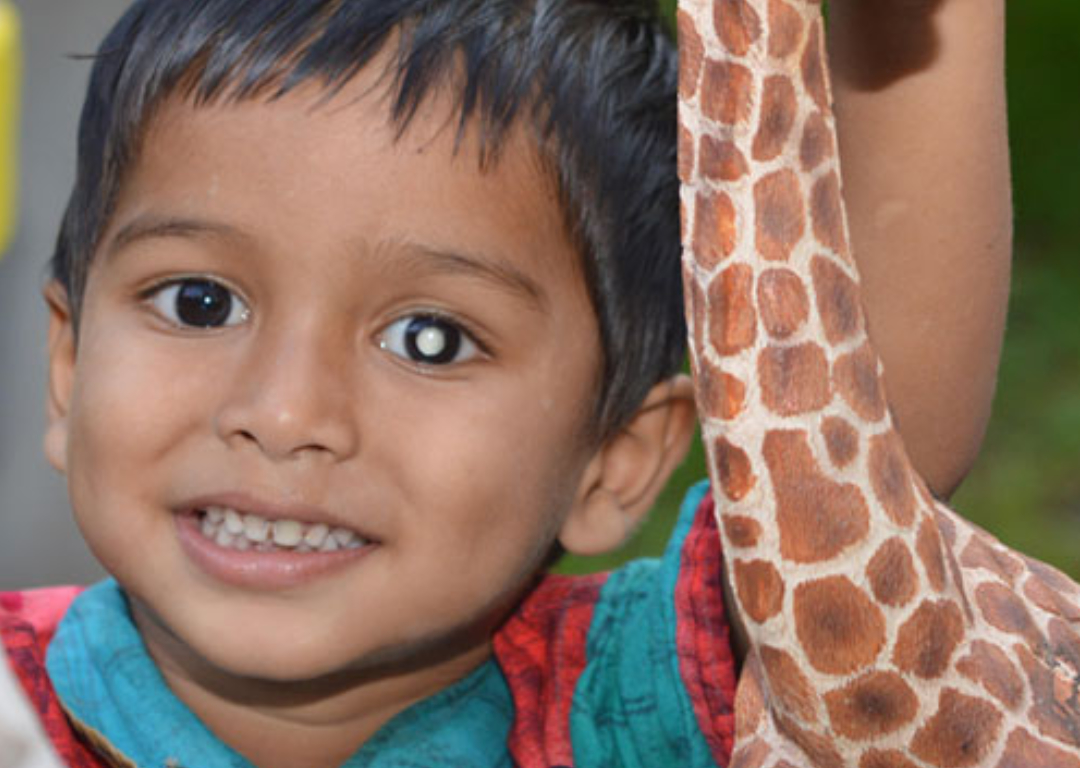
Overview
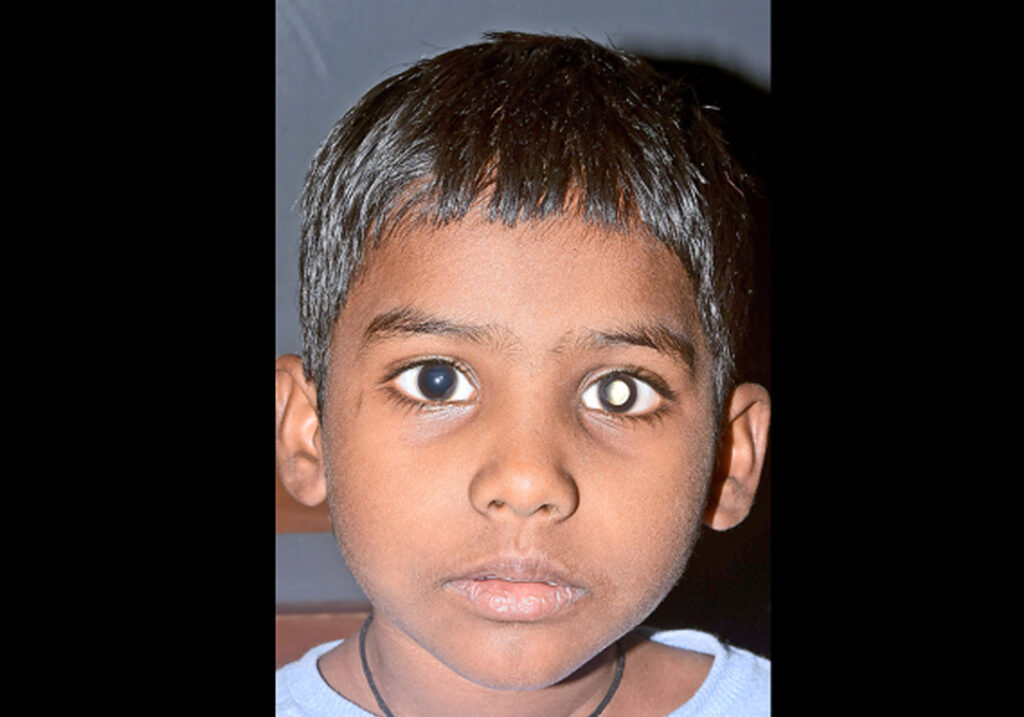
Retinoblastoma is a rare and aggressive form of eye cancer that affects children, often two years old or younger. It is the leading cause of death amongst eye cancers. In retinoblastoma, a malignant tumor develops in the retina, the innermost layer of the eye. A white spot in the eye is one of the first visible signs of this cancer.Without early detection and treatment, the tumor can spread outside the eye, into the optic nerve and other parts of the face.
Today, 99% of children with retinoblastoma survive in high-income countries. However, 43-56% of children with this cancer die in low-income nations due to delayed, or missing, treatment.
What is retinoblastoma?
In rare instances, infants and young children (often less than 2 years of age) develop ‘leukocoria’, or a white spot in their eye. A genetic mutation triggers a set of immature retinal cells to turn malignant in these children. The unchecked growth of this cell mass, now a tumor, leads to an eye cancer called retinoblastoma.
Most cases of retinoblastoma have a preponderance for one eye alone. Retinoblastoma is the most common eye cancer in children. However, there are very few facilities to screen and identify this cancer in children, not to mention treating them. In India and other developing countries, far more children die from retinoblastoma, or lose their eye, than in developed countries
What causes retinoblastoma?
The causes behind this condition are unknown. It occurs equally in boys and girls. Some 60% of cases are in one eye. The cancer is either because of an arbitrary (sporadic) mutation that triggers it or is inherited. If one parent is a carrier, the individual has a 50% risk of developing the cancer. Such a cancer is called a germline cancer, and it may present as cancer in both eyes.
Other eye cancers
Retinoblastoma is not the only cancer that affects the eye; there are other kinds of intraocular tumors too, such as choroidal melanoma, choroidal hemangioma, retinal vascular tumors, and other ocular surface tumors.
What are the symptoms?
Retinoblastoma appears in very young kids. Some of the possible symptoms are:
- Leukocoria, or a white spot in the eye
- Squint or strabismus
- A swollen or painful eye
Early and timely identification of children with this condition is critical to save the affected eye and the child’s life.
Treatment options
The Operation Eyesight Universal Institute for Eye Cancer at LVPEI sees about 200 to 250 new retinoblastoma cases every year across our network. Treatment options include:
- Chemotherapy: Drugs that target the cancer cells are injected intravenously to shrink and ultimately destroy the cancer cells. In cases where IV chemotherapy is ineffective, our centres in Hyderabad and Vijayawada also offer intra-arterial chemotherapy (IAC). IAC a delicate and complex procedure where a concentrated dose of cancer-inhibiting medication is delivered into the patient’s ophthalmic artery, the primary source of blood to the eye. IAC is particularly effective in treating retinoblastoma, but it requires precision, skill, and the support of a multidisciplinary team.
- Radiation therapy: LVPEI offers plaque brachytherapy, a complex procedure that places a radioactive plaque accurately on the tumor while sparing healthy tissue. After a few hours, the plaque is removed. LVPEI is one of the few institutions that can offer this therapy. The centres in Hyderabad and Vijayawada complies with Atomic Energy Regulatory Board (AERB) regulations.
- Lasers and cryotherapies: In the early stages of the cancer, laser photocoagulation, or focused laser beams that destroys cancerous tissue may be effective. Similarly, a cryophobe is placed on the tissue using extreme cold to freeze and thaw the cells multiple times, ultimately killing them.
- Surgery: If patients present late, they may need removal of either tumor tissue, or evisceration—the eye itself to save the life of the patient.
In some cases, trimodal therapy—all three approaches combined—may be needed to save the sight, and life, of the patient.
Frequently Asked Questions
If you suspect a white spot in your child’s eye, it is best to bring the patient to specialist eye hospital like LVPEI immediately. The sooner the eye is checked, and the cancer identified, the better the outcomes for the child.
Retinoblastoma is a very rare cancer, and it appears due to a genetic mutation. So, while there is nothing one can do to prevent it, the chances of developing such a mutation is also rare.
It is best to setup regular and comprehensive eye exams every year to screen for any potential developments. Even children who have been successfully treated for retinoblastoma need lifelong periodic surveillance.
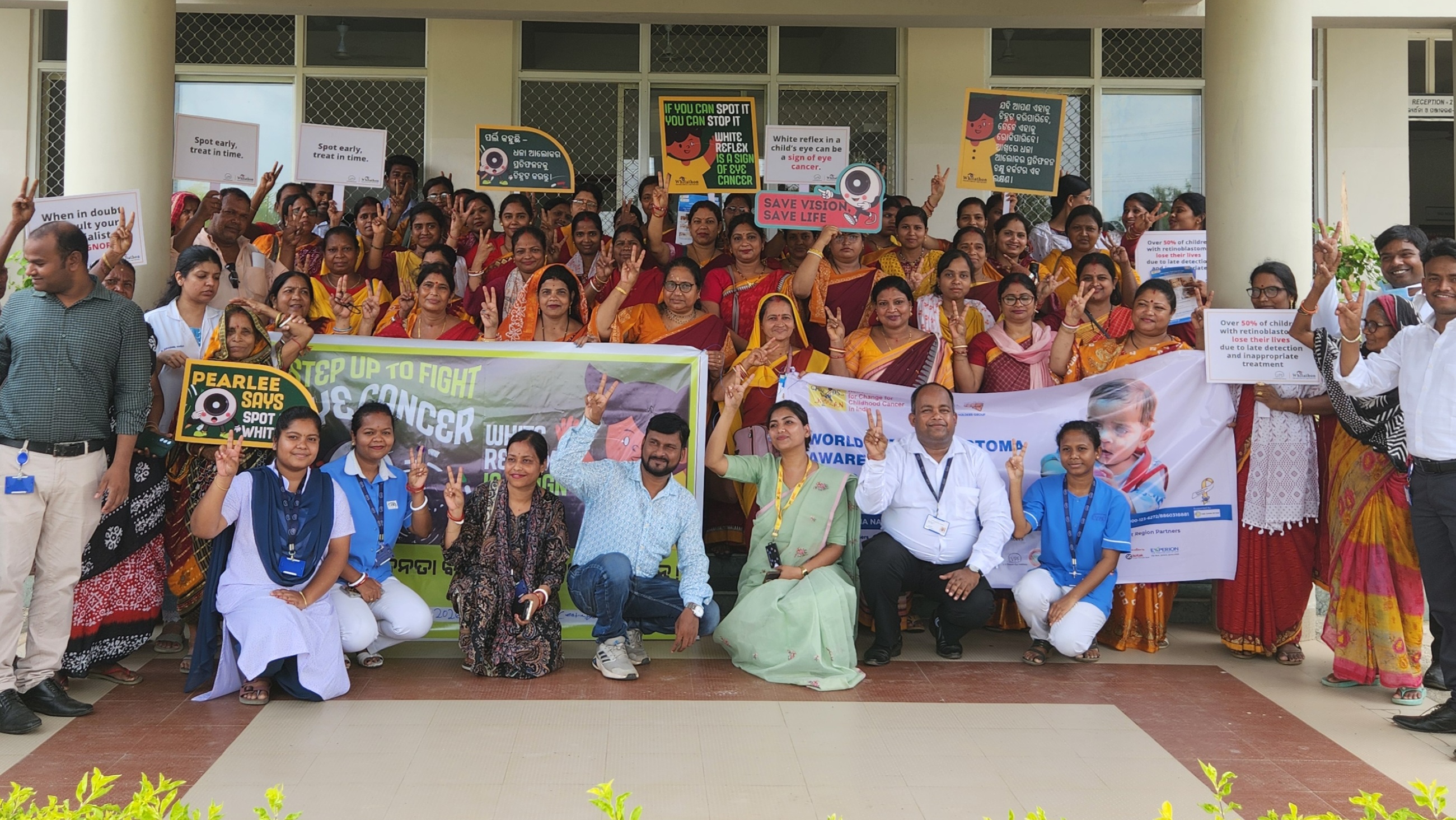
Ignorance is the primary reason many children with eye cancer lose their eyes, or die. To raise awareness, LVPEI marks the ‘Whitathon’ in May every year. This is an organised run to raise public knowledge and funds for this cause. Most people who develop this condition may not be able to afford treatment. At LVPEI, all patients, irrespective of their ability to pay, are offered the treatment they need. Including cancer care.