A Bioactive Cocktail for Fungal Keratitis
Written by Soujanya Padikkal
Published 24th September 2026
Sairam Abbireddy, Joveeta Joseph, Bhupesh Bagga and Sachin Shukla from LVPEI provide a proof-of-concept study on the therapeutic potential of mesenchymal stem/stromal cells to treat fungal keratitis.
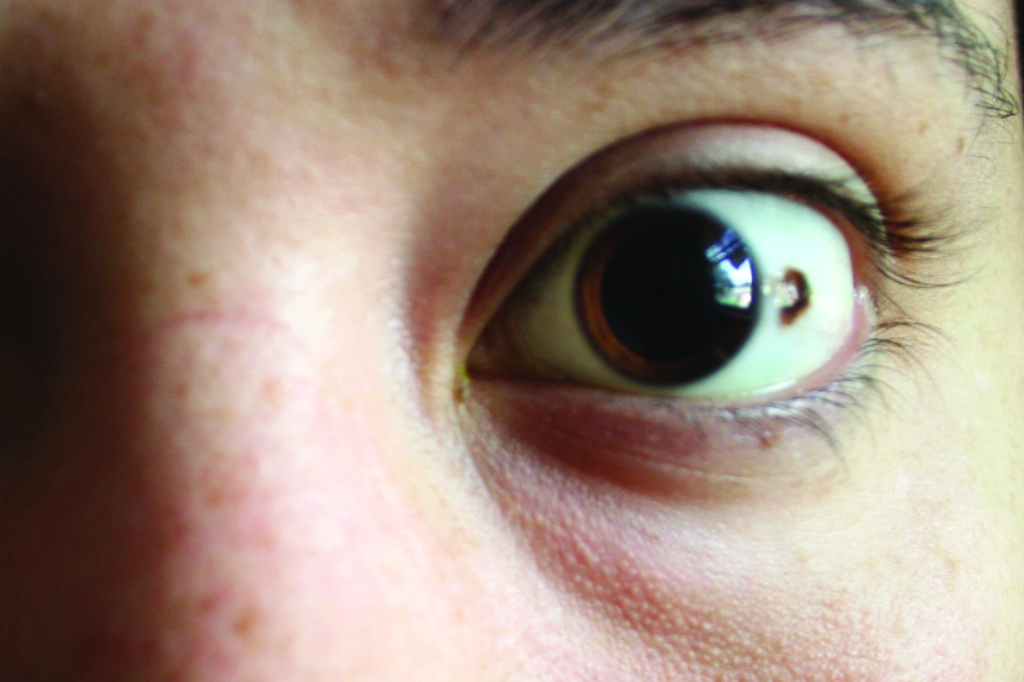
A mold. A yeast. Two common fungi that are usually harmless can become pathogens under specific environmental and acquired conditions. They can infect the cornea (the transparent outer layer of the eye) causing fungal keratitis. A sight-threatening condition, it usually occurs after an injury involving plant material and is common in agricultural workers.
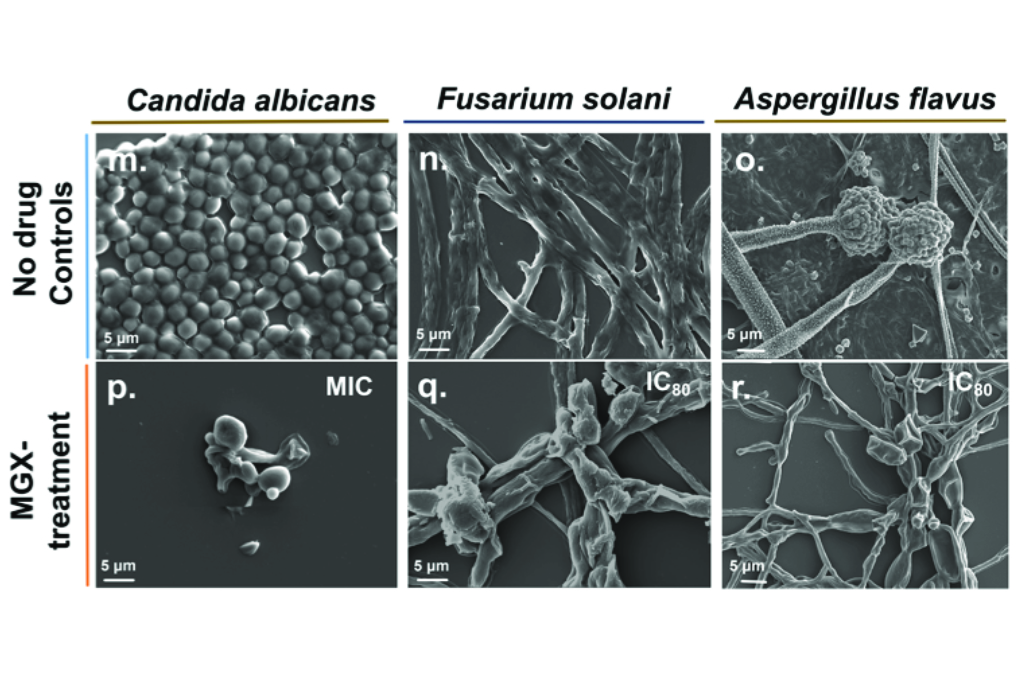
Aspergillus flavus, a mold and a common cause of ocular fungal infections, and Candida albicans, a yeast that infects people with compromised immune systems, are two of the many fungi that could cause fungal keratitis. Antifungal drugs are the mainstay of treatment. However, outcomes are poor—the drugs struggle to adequately penetrate the cornea and are not very efficacious. Researchers are therefore looking for new ways to tackle fungal eye infections.
MSCs release bioactive molecules into their surroundings through which they respond to injury, infection, or inflammation.
One possibility comes from the secretions of stem cells derived from adult tissues. Mesenchymal stem/stromal cells (MSCs) are adult stem cells capable of tissue repair and anti-inflammatory properties. MSCs release bioactive molecules into their surroundings through which they respond to injury, infection, or inflammation. In this process, they exhibit remarkable antimicrobial and anti-inflammatory properties.
MSCs can be derived from adult human tissues like adipose tissue, bone marrow, dental pulp, and the umbilical cord. When grown in the laboratory in a medium under defined conditions, they secrete molecules which accumulate in a nutrient-rich liquid which is then collected and filtered, and the resulting cell-free liquid is known as ‘MSC-conditioned medium’ (MSC-CM). Previous studies have suggested that this liquid may have therapeutic potential against infections. Could it also work against fungal keratitis?
In a new study published in Experimental Eye Research, Sairam Abbireddy, Sachin Shukla and colleagues from LVPEI explore this possibility. They collected MSC-CM from the four different tissue sources and tested it against laboratory stains and clinical isolates (strains collected from patients) of both the fungi. The findings showed that adipose tissue derived MSC-CM showed the strongest inhibition against C. albicans, while dental pulp derived MSC-CM was most effective against A. flavus—while all four sources significantly reduced fungal growth.
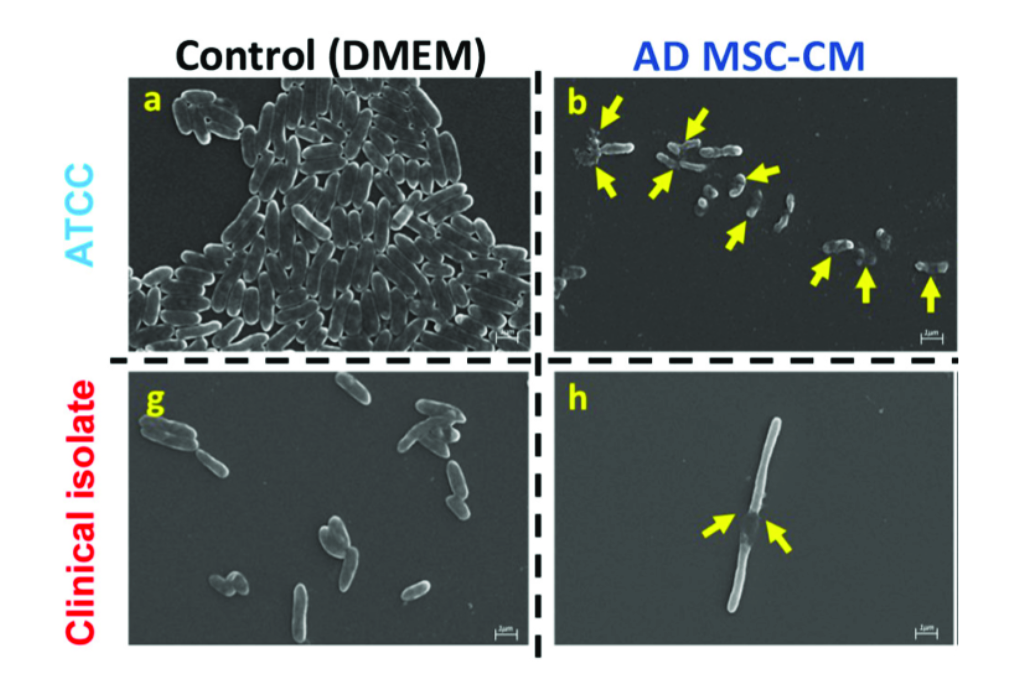
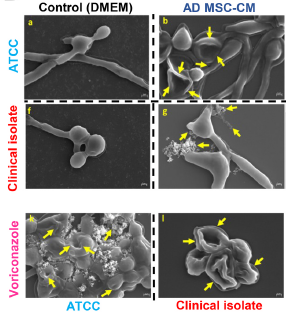
The researchers also used scanning electron microscopy to study the effect of MSC-CM-treatment on the structure of the tested fungi. They noted that the fungi, upon treatment with MSC-CM, showed surface deformation, invagination (an inward fold) and cell wall disruption, similar to the damage caused by the antifungal drug voriconazole which was used as the control.
The findings showed that adipose tissue derived MSC-CM showed the strongest inhibition against C. albicans, while dental pulp derived MSC-CM was most effective against A. flavus.
The results suggest that MSC-CM affects fungal growth and cell integrity and provide a proof-of-concept that MSC-CM may have antifungal activity. Further work is needed to identify the active components, understand their mechanism of action, and test it against more pathogenic and drug-resistant strains of fungi.
‘This is a proof-of-concept study that demonstrates the potential of stem cell-based therapeutics in treating ocular fungal infections’, says Dr. Sachin Shukla, Research Scientist, LVPEI and corresponding author of the study.
Citation
Abbireddy S, Joseph J, Bagga B, Shukla S. Mesenchymal stem cell-derived conditioned medium demonstrates antifungal activity against ocular isolates of Candida albicans and Aspergillus flavus: a proof-of-concept study. Exp Eye Res. 2026 Oct;271:111185. doi: 10.1016/j.exer.2026.111185. Epub 2026 Jul 28. PMID: 42521071.
Photo credit: Excerpted from Fig 1: Abbireddy et.al