India’s Defence Forces and LVPEI Deepen Partnership with GOC Major General Misra’s Visit

Written by LVPEI Communications
Published 30th May 2026
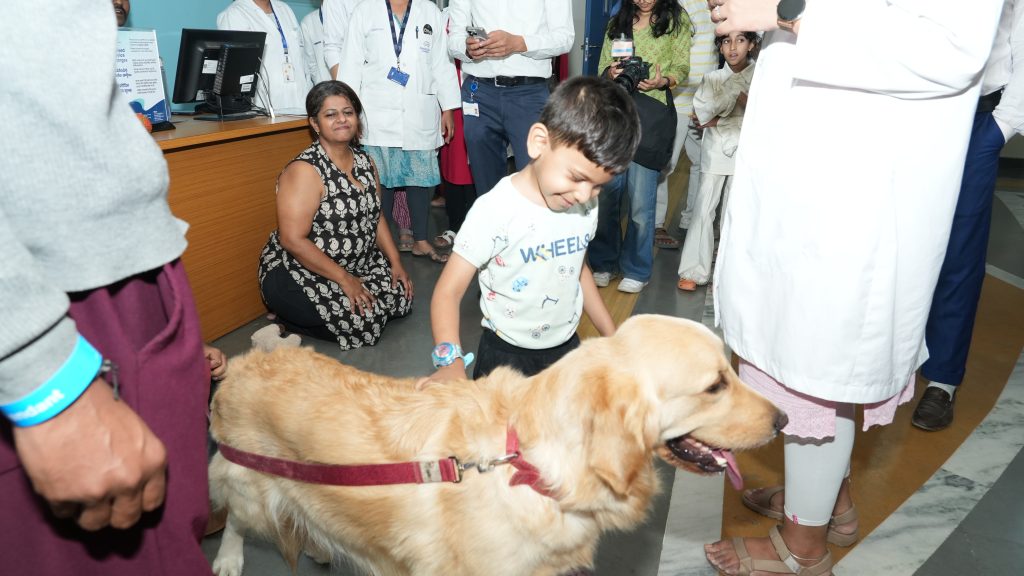
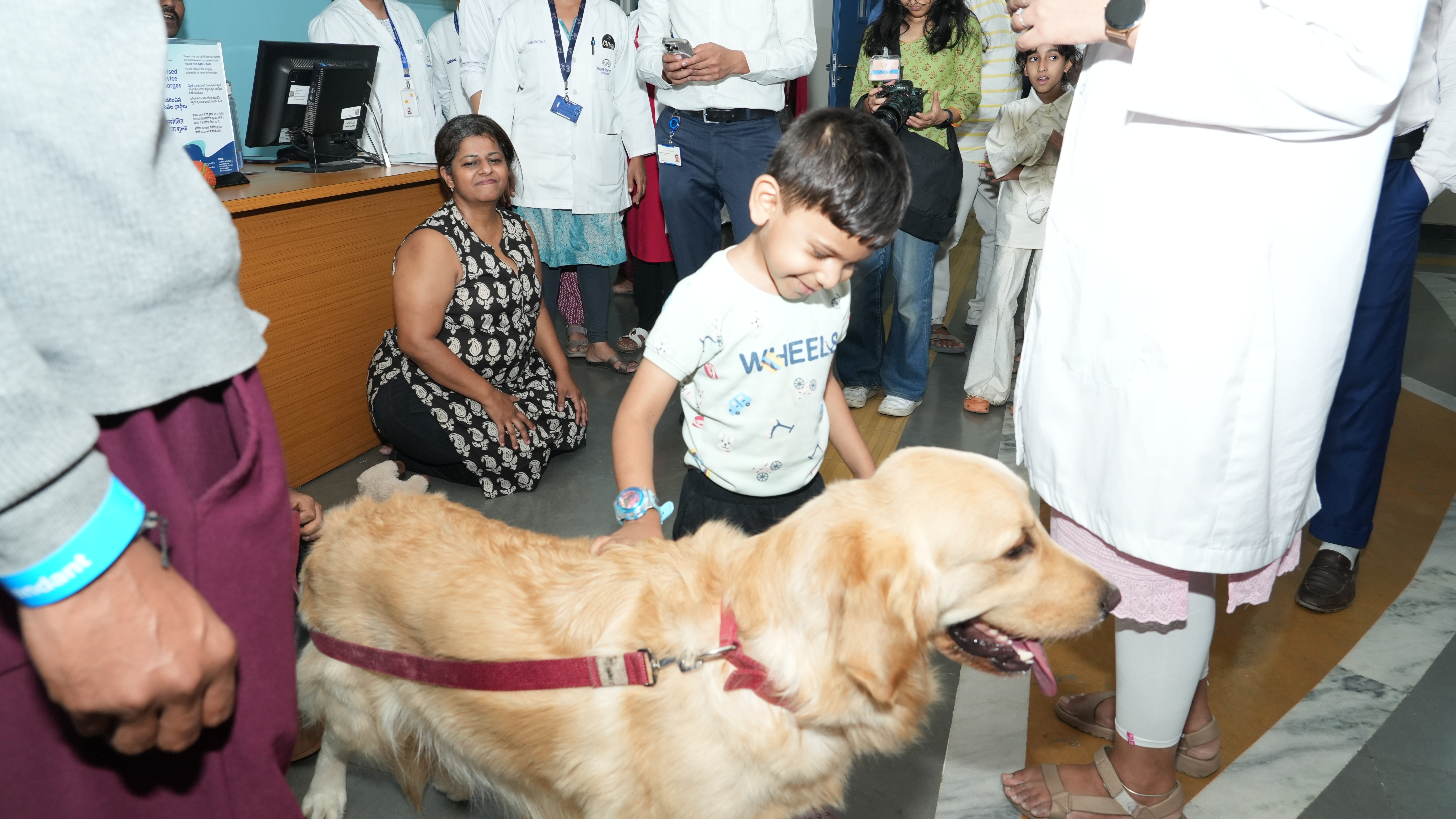
As part of a new pilot, therapy dogs were brought into the patient care areas at the Kallam Anji Reddy Campus in Banjara Hills, Hyderabad. The pilot program kicked off on May 19, 2026 at the pediatric outpatient department. It involves bringing a couple of hypoallergenic dogs and poodles into the hospital wards and clinics each week, with visits running for a couple hours. The canines are trained and managed by Animal Angels Therapy Centre, a first-of-its-kind facility in India specializing in human-animal interaction programs.
Research increasingly shows that interaction with animals can reduce stress and anxiety. Studies have found that petting a dog can lower cortisol levels, improve emotional well-being, and increase feelings of comfort and connection. Patients across the ages–from children to the elderly–have reported positive experiences with animal-assisted therapy.
Inspired by this evidence, this initiative was developed by Dr Beula Christy, Head, Institute for Vision Rehabilitation (IVR) and Dr PremNandhini Satgunam, Scientist, LVPEI Kallam Anji Reddy Campus, who are championing the animal-assisted support as a way to ease the stress of hospital visits, particularly for young patients. Following the opening day at the Pediatric OPD, the canines visited the ocular oncology ward on May 20, with subsequent visits planned across IVR over a period.
LVPEI’s Banjara hills campus runs large-volume, busy outpatient clinics. Most of our patients come to us with complex and chronic problems. They need repeated tests and eye exams, spending hours walking in the corridors. The children with impaired vision, or even life-threatening conditions, are in distress and would rather be home. Many a time, entire families visit us, with the non-patient siblings tagging along. Our pediatric wards are bright and filled with toys and opportunity for play, but it is a clinic after all.
When the dogs entered these rooms, the atmosphere was transformed. These patients became kids again. They slowly stretched their tiny hands out to pet them. Brothers and sisters chattered away, shot selfies, and took turns nuzzling the dogs, while their relieved parents stepped in from time to time. For a brief while, the hospital felt less like a place of illness and more like a place of comfort and care.
This pilot initiative also raises important questions for the future. How do we measure the impact? What are the safeguards needed? How can Indian institutions contribute meaningful research to this field? After all, most lessons in animal-assisted therapy are from the first world. But Dr Beula asks some interesting questions: How do we measure the happy faces of the kids in the cancer ward? How to quantify the journey from fear and anxiety, to smile and cherishment?