
Educational guidance and support
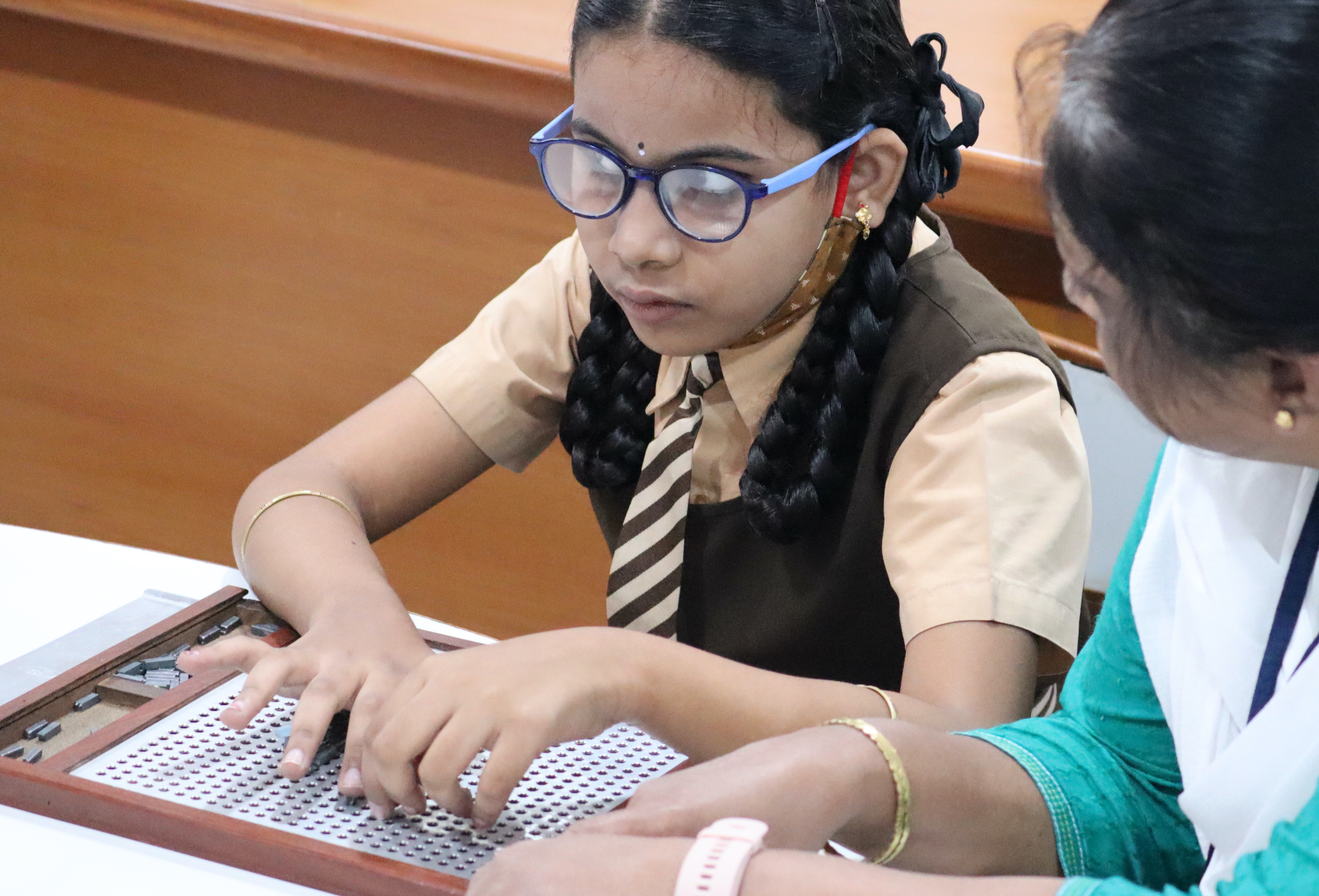
Individualized assessment of the learner’s visual and educational needs is done, to identify the most suitable learning media and support. Children and adults with vision loss are supported to access and continue education through educational assessment, pre-Braille training, Braille, learning media, assistive devices, classroom adaptations and educational guidance.
Guidance is provided on Braille, print, large print, audio and digital learning, along with training in the use of appropriate assistive devices and specialized educational gadgets.
We work with students, parents and teachers to suggest practical classroom modifications and support teachers in adapting teaching and learning materials. Guidance is also provided on examinations, accommodations, course selection and educational opportunities to help learners pursue education with greater confidence and independence.
What we do








The digital library provides a wide range of accessible books in audio, braille, large print and E-book formats. The large collection of audiobooks include academic subjects, competitive examination preparation and reference material, and leisure reading.
What makes our resources unique is the way we make complex and visually presented content accessible. Tables, pictures, diagrams, science experiments, mathematical concepts and other visual information are explained in detail to help learners understand the content clearly and independently.
We also support individuals who cannot find the book they need in our collection, by recording books based on their specific requirements. Braille and large-print books are also prepared on demand.
The three-month structured program equips people (with vision loss), with the digital and independent life skills needed for education, employment and everyday life.
People with vision loss are trained to use computers and smartphones via screen readers, magnification and accessible applications, including tools for identifying objects and surroundings, accessing information, navigation, travel, communication and shopping. The training also includes personality development, spoken English, group interaction and exposure visits to organisations, that build confidence and workplace readiness.
Training includes assistive software such as JAWS, MAGic, NVDA and Microsoft Outlook, along with practical computer skills for documents, email, internet use and other workplace applications.
Participants receive practical training in independent mobility, personal grooming, home management and other essential skills needed for employment and independent living.
The program focuses on using technology to improve efficiency and safety in everyday life, there by ensuring independence.
Accommodation is available for a limited number of participants during the training period, subject to availability.
Explore what else we do
Contact
Have questions? Contact our counsellors to know more.
Phone: 040 2068102841
Email: rehabhelpline@lvpei.org